Shenmue was supposed to change everything. When it came out in 1999 on the Dreamcast, it felt like a message from the future. A game with real weather, day-night cycles, NPCs who lived their own lives, and a world you could touch. It was the most expensive game ever made at the time, and it showed. The ambition was staggering. The question that matters now, more than two decades later, is whether that ambition still translates into an experience worth having in 2026. The honest answer is complicated.
I first played Shenmue in the winter of 2000, on a Dreamcast plugged into a small CRT in my bedroom. I was nineteen. I had never seen anything like it. I wandered the streets of Dobuita for hours, talking to people, buying capsule toys, feeding a kitten, and wondering when the revenge story would actually start. I didn't care that nothing was happening. The nothing was the point. The world was the point. Replaying it now, as a forty-one-year-old with a job and a family and a finite hour of free time per night, the world is still the point. But the nothing is harder to ignore.
The Opening Still Feels Like Nothing Else
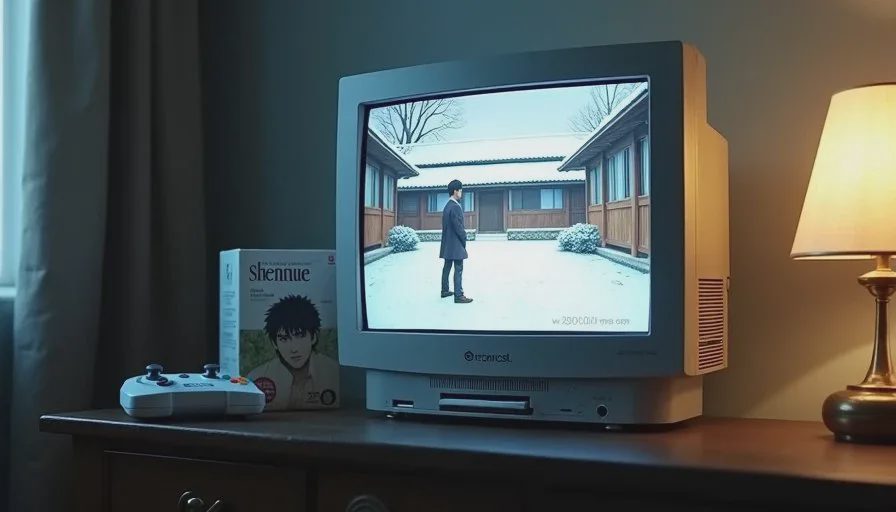
The first ten minutes of Shenmue are still remarkable. The game opens with a cinematic sequence, then drops you into the Hazuki residence in a quiet Japanese town. There's snow on the ground. The sky is gray. The music is soft and melancholy. Your father has just been killed, and your first objective is not to chase the killer but to walk around and talk to people.
That restraint still impresses me. Most games would turn this setup into a tutorial full of prompts and markers. Shenmue instead asks you to live in the aftermath. You talk to your housekeeper. You visit the dojo. You walk down to the phone booth. The world feels heavy with grief and confusion, and the game doesn't rush you through it.
This is the Shenmue I remember loving, and it's still here. The atmosphere is singular. The music, the muted colors, the way the snow falls outside the window — it creates a mood that very few games have ever matched. I sat for a few minutes just looking at the snow through the sliding door. That's not something I do in most games.
The World Still Feels Alive
The most impressive thing about Shenmue, even now, is the world simulation. Every NPC has a schedule. Shops open and close. People walk to work, stand around, go home. The weather changes. Day turns to night. The town of Dobuita feels like a place that exists whether you're there or not.
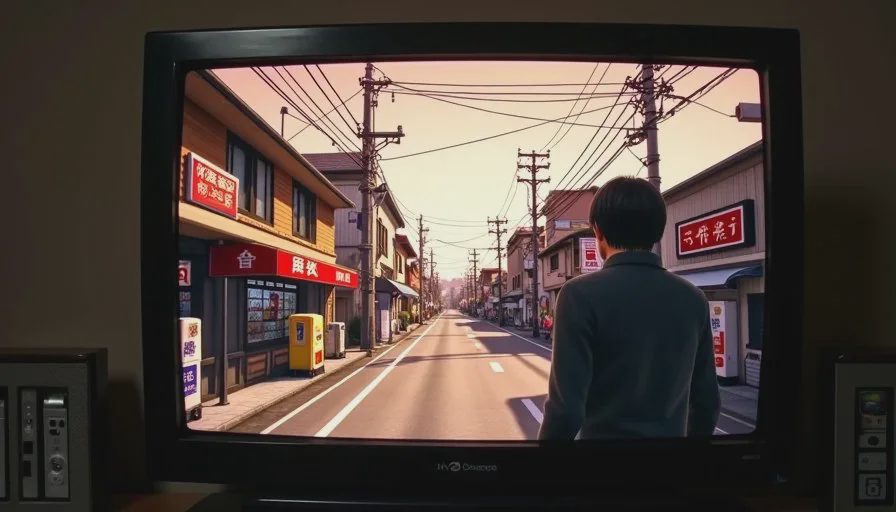
On this replay, I paid more attention to the details than I did as a teenager. The shop signs, the vending machines, the telephone poles, the way the light changes in the late afternoon. There's a density of observation here that's still rare in games. Most open worlds are built around activities. Shenmue is built around presence. It wants you to notice the world, not just use it.
I spent a full in-game day just following a few NPCs around, watching where they went. The barber closed his shop at six. The woman at the flower stand went home at five. The old man near the shrine stood in the same spot for hours. None of this served a gameplay purpose. It was just texture. And texture is what Shenmue does better than almost anything else.
The Forklift and the Daily Grind
But here's where the limits of patience begin to show. Shenmue is not a game that respects your time. It is a game that asks you to inhabit time, to fill it with small routines, to wait for the next story beat to arrive. Some players find this meditative. I used to be one of them. Now, as an adult with limited hours, it feels different.
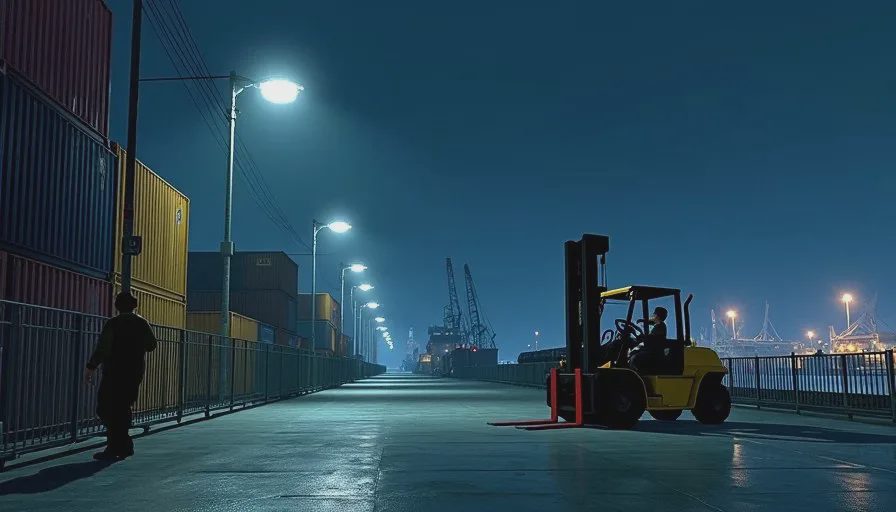
The forklift section is the clearest example. At a certain point in the story, you take a job driving a forklift at the harbor. You work every day. You move crates. You race against a timer. You earn money. The first time I played this, I found it weirdly compelling. It was a job inside a game, and the routine was soothing. This time, I found myself dreading the shifts. The work is repetitive, the timer is forgiving, and the money you earn doesn't matter much. It's padding, dressed up as realism.
The game also makes you wait for specific times of day. If the next event happens at 7 PM, you have to kill the hours until then. You can practice martial arts, play arcade games, buy capsules, or just walk around. That freedom was magical in 1999. Now it feels like the game is asking me to fill time it should be filling for me.
The Pace Is the Point — and the Problem
I keep coming back to this tension. Shenmue's slowness is not an accident. It's the core design philosophy. The game wants you to feel the weight of days passing, the slow accumulation of routine, the way a real investigation might unfold over weeks rather than minutes. That's an artistic choice, and I respect it.
But respecting a choice is not the same as enjoying its consequences. On this replay, I found myself checking my watch during long stretches of walking. I found myself rushing to the next time-skip point so I could advance the story. I found myself wondering why the game wouldn't just let me move faster, or skip the commute, or fast-forward to the next meaningful moment.
The answer, of course, is that those meaningful moments are supposed to be scarce. Shenmue is built around the idea that life is mostly waiting. That's a profound statement for a video game to make. It's also, for an adult player with a finite evening, a difficult one to sit with.
What Hasn't Aged Well
Beyond the pacing, there are other elements that feel rough now. The controls are stiff, especially when you're trying to navigate tight interiors. The combat is serviceable but not deep — a simplified Virtua Fighter that rarely demands much from you. The voice acting, famously, is stilted and awkward, though I've always found a certain charm in it. The dialogue is often repetitive, and the game has a habit of repeating the same line multiple times as you exhaust NPC dialogue trees.
The graphics, on original hardware, are a mixed bag. The character models are blocky, but the environments still have a certain beauty to them, especially in the evening light. On a CRT, the rough edges soften and the world feels more cohesive. On a modern display, the limitations are harder to ignore.
The Verdict: A Game You Admire More Than You Enjoy
So does Shenmue still hold up? The honest answer is: it depends on what you're asking of it. If you're asking for a game with tight pacing, engaging combat, and a story that moves forward with purpose, then no. Shenmue is not that game, and it never was. It's slow, meandering, and often frustrating. It asks more from your patience than almost any other game of its era.
But if you're asking for something else — a game that tries to capture the texture of a real place, that treats time as a material, that values atmosphere over action — then Shenmue still matters. There's nothing quite like it. The closest modern comparisons are games that intentionally adopt slowness as an artistic stance, and even they rarely go as far as Shenmue did.
When I finished this replay, I felt the same mixture of feelings I did as a teenager: admiration, exhaustion, and a strange kind of melancholy. The game is a masterpiece of atmosphere and a disaster of pacing. Both things are true at once. That's the most honest thing I can say about it.
Some classics survive contact with adulthood. Shenmue survives, but it asks you to slow down in ways that adulthood often makes impossible. If you can give it that — if you can sit with the waiting, the walking, the endless small talk — then the world will open itself to you. If you can't, you'll bounce off it hard. And neither outcome is wrong.
A game doesn't stay good just because you loved it first. Shenmue stays interesting because it tried something no one else has ever fully repeated. Whether that's enough to make it worth your time in 2026 is a question only you can answer. But I can tell you this: I'm glad I went back. I'm also glad it's over.