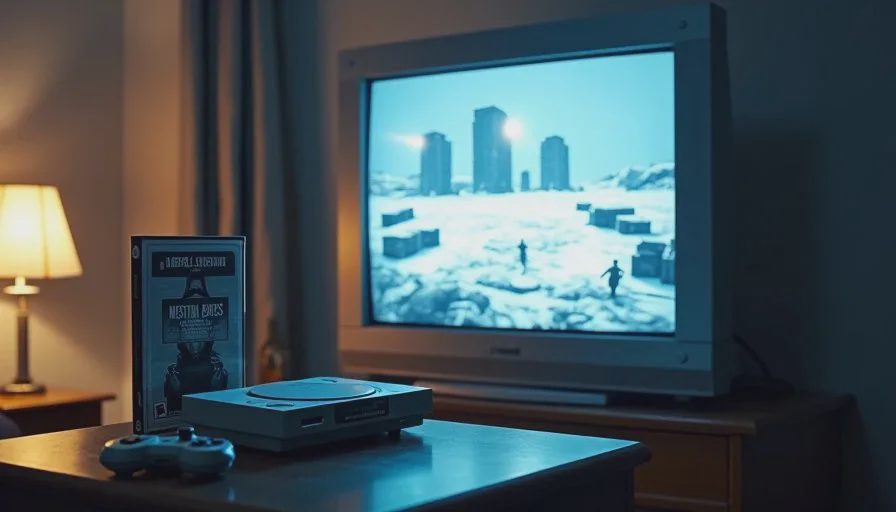
I first played Metal Gear Solid in the fall of 1998, in a friend's basement, on a 19-inch CRT that buzzed faintly whenever the screen went dark. It felt like nothing else on the PS1. The voice acting, the stealth, the codec, the fourth-wall tricks — it all seemed impossibly adult for a console game. Nearly thirty years later, the question is simple: do old games still hold up, and does Metal Gear Solid specifically earn its reputation or just coast on it?
For this classic game replay review, I set aside two weeks and replayed the PS1 original on real hardware, not an emulator, because the original experience matters. I took notes. I died more than I'd like to admit. And I came away with a mix of genuine admiration and honest frustration. If you're replaying old games as an adult, this one will test your patience in ways you might not expect — and reward it in ways that still feel singular.
The Opening Hour Still Knows What It's Doing
The first thing that hits you is restraint. Metal Gear Solid opens with a swim, a crawl, and a slow elevator ride. There's no action for the first several minutes. Just sound design, a brief title card, and the hum of ambient noise. A modern game would front-load a set piece or a chase. This one lets you sit in the quiet.
That restraint carries through the opening hour. You don't unlock a weapon early. You avoid guards instead of engaging them. The game teaches you to read patrol patterns, to knock on walls, to move slowly. Even the codec calls serve a pacing function — they break up the quiet with conversation, then return you to it.
What surprised me on this replay is how well the atmosphere holds up. Shadow Moses Island still feels cold, isolated, and weirdly believable. The low-poly models are primitive, but the art direction works with them. The hallways feel institutional. The snow outside looks almost abstract, but the sound of footsteps in it sells the space. Some PS1 games that aged well lean on pre-rendered backgrounds. Metal Gear Solid uses full 3D environments and mostly gets away with it because the geometry is clean and the fog hides the draw distance.
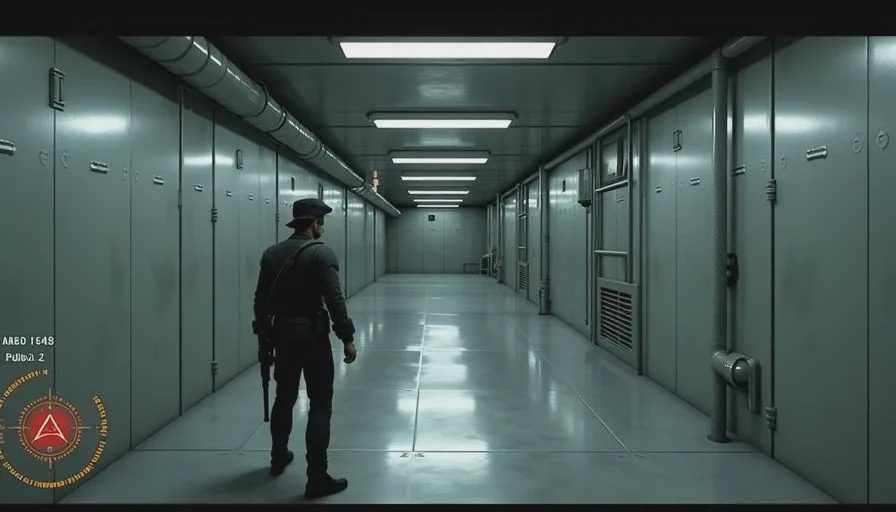
This is one of the rare retro games worth playing today for atmosphere alone. I played most of it after 10 p.m., in a dark room, on a CRT. That's how it was designed to look, and it matters. On a modern flat screen with sharp scaling, the textures look harsher and the fog looks like a technical compromise. On a tube, it looks like a place.
Controls That Fought You Then Still Fight You Now
Here's the hard part. The controls in Metal Gear Solid were never smooth, and they have not improved with age. Snake moves with an eight-direction digital stick. He can't strafe. He can't crouch-walk freely. He can't move and aim at the same time. Most of the stealth toolkit — the chokehold, the corner peek, the wall knock — is mapped to a combination of button taps and menu selections that feel deeply unintuitive by modern standards.
The first-person aiming deserves its own paragraph. In 1998, holding a button to look through Snake's eyes felt revolutionary. In 2026, it feels like a temporary mode that takes you out of the action. You can't move while aiming. You can't smoothly lean. You toggle in, line up a shot, toggle out. Against the early guards, this is manageable. Against bosses, it becomes a test of patience.
I want to be fair, though. Some of this clunk is deliberate. The game wants you to avoid combat, and the awkward gunplay reinforces that. It's not a third-person shooter with stealth elements. It's a stealth game that punishes you for treating it like a shooter. That's a legitimate design stance. But it doesn't make the controls feel better when you're caught and forced to fight.
Why the Limitations Mattered
The limitations shaped how the game felt. Because you couldn't run and gun, every encounter carried weight. Getting spotted meant either committing to a messy fight or breaking line of sight and waiting out an alert. The radar helped, but it also created tension — watching a cone of vision inch toward your position with no way to shoot your way out cleanly.
Modern stealth games have smoothed over this friction. You can usually handle a bad situation with a quick escape or a silenced headshot. Metal Gear Solid doesn't offer that mercy. It expects you to plan. If you don't, it makes you feel it.
I think that's why so many players remember it as more difficult than it actually is. The controls aren't hard because the game is complex. They're hard because they refuse to cooperate with instincts you've built over decades of modern game design. When I stopped trying to play it like a modern stealth game and accepted the limitations, the experience got better. Not easier, necessarily. But better.
Codec Conversations Still Land — With One Exception
The writing in Metal Gear Solid remains a genuine strength. The voice cast — especially David Hayter as Snake and Cam Clarke as Liquid — brings an odd, theatrical energy that still works. These characters speak in long paragraphs. They repeat phrases. They explain things that don't need explaining. And yet there's a rhythm to it, a kind of late-'90s action-movie sincerity that feels almost charming now.
The codec itself is a clever narrative device. It lets the game deliver exposition without breaking the action for cutscenes. It builds relationships through repetition. You actually look forward to calls from certain characters — Otacon's nervousness, Campbell's steady formality, even Naomi's clipped delivery. The dialogue has personality.
The exception is the pacing of some of these conversations. A few codec sequences run far longer than they need to, especially the ones that explain gameplay mechanics. In 1998, gamers tolerated this because it was new. Now it feels like padding. I found myself wishing for a "press triangle to skip line" option during certain calls, particularly the ones about keycards and temperature-sensitive explosives. This is one area where the game hasn't aged gracefully.
The Boss Fights Are a Mixed Bag
Metal Gear Solid's boss roster is legendary, but the actual fights are uneven. Let me break down the three that stood out on this replay.
Psycho Mantis still delivers. The screen trick, the controller vibration, the "reading your memory card" bit — it all lands because it's so specific to the PS1 hardware. It's not just a boss fight; it's a performance piece. I knew exactly what was coming, and it still made me smile. My daughter walked in during this fight and asked why the screen went black. That's the kind of reaction this game was built to provoke.
Sniper Wolf is more tedious than I remembered. The second encounter, in the snowfield, requires you to crawl through tall grass, stand up, aim with a sniper rifle, and shoot before she does. If you miss, she hits you, and you have to use a recovery item. The rhythm gets repetitive fast. The first fight is tighter. The second one drags. I respect the tone and the music, but the mechanics don't support the drama.
The Metal Gear Rex fight still works. It's not complex by modern standards, but the setup is clear: dodge, use chaff grenades, fire stingers at the vulnerable point. The scale of the machine sells it. The cockpit view, the radar dish, the way the arena changes as the fight progresses — it's all communicated cleanly. I died twice, learned the pattern, and won. That's a satisfying loop.
What Felt Radical in 1998, and What Just Feels Old Now
Let me separate the two. The radical parts: the cinematic presentation, the self-aware fourth-wall tricks, the codec as storytelling device, the integration of stealth into a mainstream action game. These were genuinely forward-thinking, and most of them still read as intentional and smart.
The parts that just feel old: the inventory menus, the slow text scrolling, the save system (which still works fine but feels clunky), the fixed camera angles in certain rooms, and the occasional unclear objective. The game doesn't hold your hand, and sometimes that's a virtue. Other times it means wandering a hallway for ten minutes because you missed a wall texture that was actually a vent cover.
The Verdict: A Game You Respect More Than You Enjoy
Here's the honest take, the kind of retro game review with a modern perspective I promised this blog would offer. Metal Gear Solid is still important. It's still atmospheric. It's still surprisingly well written for a PS1 game, and parts of it — Psycho Mantis, the opening hour, the final stretch — remain genuinely compelling.
But it is not a comfortable replay. The controls are a wall you have to climb over, not a skill you build. The pacing sags in the middle. Some of the things that felt revolutionary now feel like historical artifacts, interesting but not enjoyable.
I finished it. I'm glad I replayed it. But I kept thinking about a line I wrote in the first post: a game doesn't stay good just because you loved it first. Metal Gear Solid stays good for reasons that have nothing to do with my first love — the atmosphere, the voice work, the structural ambition. It also frustrates for reasons that have everything to do with how much game design has improved since 1998.
If you have nostalgia for this game and haven't touched it in twenty years, I'd say this: replay it for the parts that still feel special, but go in knowing the controls will fight you. If you've never played it and are curious whether it's one of those retro games worth playing today, the answer is a qualified yes — if you can tolerate its era.
Some classics survive contact with adulthood. This one survives, but it demands something from you first. And maybe that's the most honest thing I can say about it.