There's a specific phrase that gets thrown around in retro gaming circles: "endlessly replayable." People say it about PS1-era RPGs all the time. Final Fantasy VII, Chrono Cross, Xenogears, Suikoden, Wild Arms, Legend of Dragoon — the list goes on. The claim is that these games were deep, rich, and worth returning to again and again. But when I started actually replaying them as an adult with limited time, a different picture emerged. The hard truth is this: many PS1-era RPGs were never designed around replayability. They were designed around absorption. And those are not the same thing.
This isn't a takedown. I loved these games. Some of them are still among the best old games that still hold up in specific ways. But if we're going to talk honestly about old games vs nostalgia, we have to admit that the RPG genre from this era asks more from a returning player than almost any other.
What Made PS1 RPGs Feel Replayable
Let me start with what those games got right, because it matters. PS1-era RPGs were often structurally ambitious. They didn't just want to tell a story — they wanted to build a world you could live in, with side quests, hidden characters, optional bosses, minigames, and narrative choices that seemed to echo beyond the main plot.
Final Fantasy VII had the Gold Saucer, chocobo breeding, and the materia system. Suikoden had 108 recruitable characters and a castle that grew as your army did. Chrono Cross had dozens of playable characters and a dual-world structure that encouraged exploration. These systems created the illusion of infinite possibility. You could replay the game and find things you missed the first time. That's the foundation of the replayability myth.
And the myth isn't entirely false. Those systems do exist. The games do contain hidden content. If you want to 100% a PS1 RPG, you'll need multiple playthroughs or a very detailed guide. But that's not the same as the game feeling good to replay. The distinction matters more than retro gaming discourse usually admits.
The Real Cost of Random Encounters
Let's talk about the most obvious friction point: random encounters. In 1998, they were a normal part of the genre. In 2026, they're the single biggest reason I hesitate to load up another PS1 RPG. Not because they're difficult, but because of how they interact with adult time.
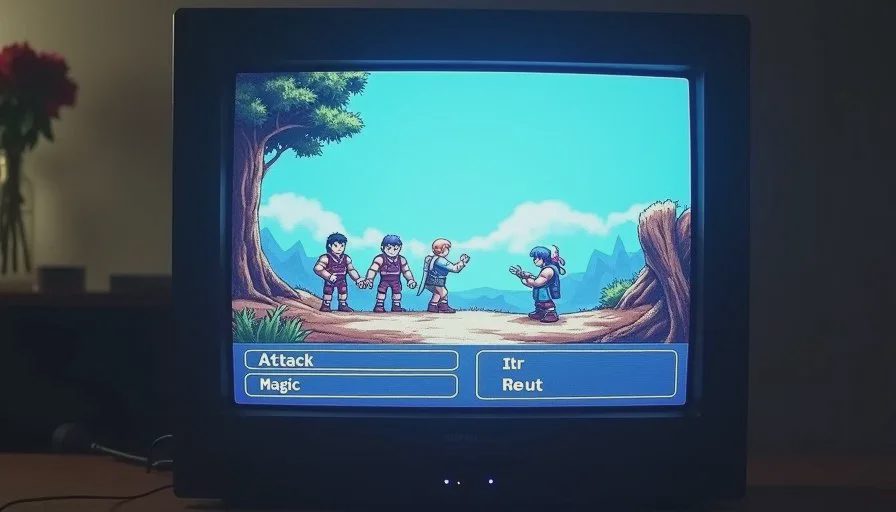
A typical PS1 RPG random battle works like this: the screen shatters, the battle loads, you watch a brief animation, you select commands, the turns play out, you watch the victory animation, the screen fades back to the world map. Even a trivial fight takes thirty to forty seconds. In a two-hour session, if you hit forty encounters — which is conservative for most of these games — that's twenty to twenty-five minutes of pure transition time. A quarter of your session spent watching the same animations you've seen a hundred times before.
That ratio feels very different when you're fifteen and have a full afternoon than it does when you're forty-one with ninety minutes after the kid goes to bed. The fights aren't the problem. The repetition is. And the rate of encounters in many PS1 RPGs was tuned for players who had nothing but time.
Final Fantasy VIII is a good example. The encounter rate in certain areas is punishing, and the Draw system encourages you to spend multiple turns stockpiling magic from the same enemy. A fight that should take twenty seconds becomes a two-minute resource extraction loop. I'll write a full Memory vs. Reality piece on that game later, but it's worth mentioning here because it represents the genre's core problem: systems that treated player time as an unlimited resource.
Save Points Were a Promise the Player Made to the Game
Here's another thing we collectively forgot: PS1-era save points were often placed far apart, and sometimes after long unskippable cutscenes. The result was a kind of unspoken contract. You didn't just sit down and play. You planned your evening around reaching the next save point. If life interrupted — dinner, a phone call, a kid waking up — you either left the console running or you lost progress.
I replayed part of Xenogears a few months ago. There's a stretch in the early game, not long after the desert section, where the save points thin out and the cutscenes stack up. I hit a sequence where I watched twenty minutes of story, fought a boss, watched another cutscene, and then died to a regular encounter because I hadn't healed. The game put me back before the first cutscene. I turned it off and didn't return for a week.
That's the hard truth about replayability in PS1-era RPGs. The games didn't just ask for your attention. They asked for a commitment. And as an adult, commitment is exactly what I have the least of.
Why This Felt Different in 1998
The context mattered. In 1998, a game that lasted sixty hours was a feature. It meant you got value for your money. It meant the game would fill an entire summer or a school year. Losing progress was frustrating, but the cost was lower because time was abundant. You could replay a section and it didn't feel like a theft. It felt like part of the experience.
Now the math has changed. I'm not saying modern adults can't enjoy long games — I still play some long games. But the tolerance for friction has dropped dramatically. A game that wastes my time today loses me. A game that wasted my time in 1998 just became a story I'd tell my friends at lunch.
That's the real gap between memory and reality. We remember the depth, the music, the characters, the plot twists. We forget the repeated battles, the long walks between objectives, the save point that was just a little too far away. The memory compresses the experience into its best moments. The reality includes everything between those moments.
Which PS1 RPGs Actually Hold Up
I don't want to end this on a purely negative note, because some of these games do survive contact with adulthood. The ones that hold up tend to share certain qualities.
First, they respect your time even within their era's limitations. Suikoden II, for example, has a fast battle system, a run button, and a structure that keeps the story moving. The encounter rate is lower than many of its peers, and the pacing of the first ten hours is genuinely tight. Replaying it now, the friction is still there, but it's manageable.
Second, they have systems that stay interesting. Final Fantasy VII's materia system rewards experimentation without forcing you to grind if you don't want to. You can cruise through the main story with a basic setup, or you can dive deep if the mood strikes. That's good design in any era.
Third, they have a tone or atmosphere that transcends the technical limitations. Chrono Cross, for all its structural weirdness, still sounds like nothing else. The soundtrack and art direction carry sections of the game that would otherwise sag. When I write the full Second Run piece on it, I'll get into the details. For now, let me say this: the games that hold up are the ones that give you a reason to keep going beyond obligation.
The Honest Take
PS1-era RPGs are not as replayable as we remember. What they are is formative. They shaped a generation's expectations about what RPGs could be — epic, emotional, mechanically ambitious, musically unforgettable. But the actual design language of the era often worked against the player's time, and it worked even harder against the adult player who wants to return to a game they loved.
So when I hear someone describe a PS1 RPG as "endlessly replayable," I try to be charitable. I know what they mean. They mean the game left a mark deep enough that they want to go back. They mean the world still calls to them. That's real. That's worth honoring.
But if they're asking me whether the game is worth replaying now, on a weeknight, with adult responsibilities and a finite hour of free time, I have to be honest. Some of them are. Many of them aren't. And the difference between the two has more to do with how the game treats your time than how much it impressed you when you were young.
A game can be important without being easy to recommend. That sentence will show up a lot on this blog, because it applies to this genre more than almost any other. PS1 RPGs are important to me. They are not always easy to recommend in 2026.
That's not nostalgia talking. That's the reality. And the whole point of this column is to sit with that difference honestly, even when it stings a little.