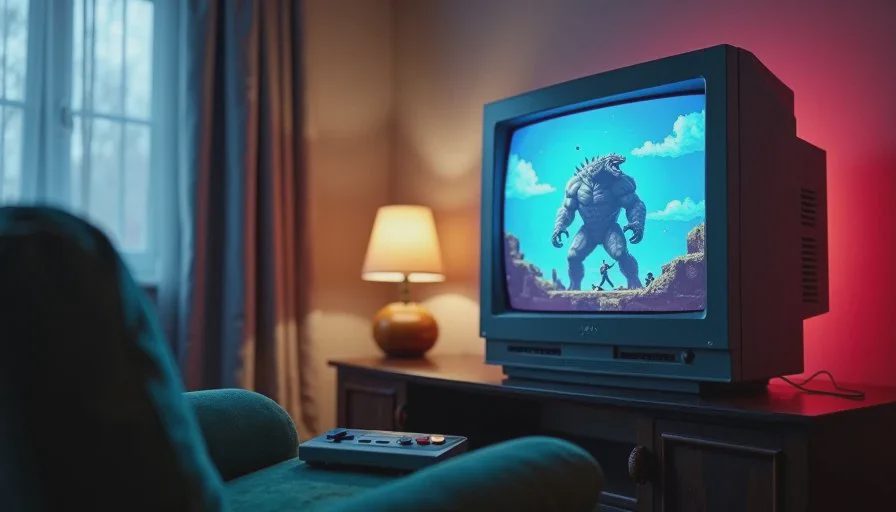
There's a strange thing that happens when you replay old games after twenty years. The boss fights you remember as monumental, as defining, as the moments that made the game — some of them turn out to be ordinary. A pattern you can learn in three attempts. A damage sponge with a gimmick. A fight that lasted four minutes but felt like forty when you were fifteen. And then there are the ones you'd forgotten entirely — the small, quiet fights that turn out to be better than the legends. Memory is a terrible archivist. It keeps the poster shots and throws away the actual experience.
This column is about closing that gap. About going back to the boss fights we remember as epic and asking which ones actually were. Not to tear down childhood, but to get honest about what made those moments work — and why some of them still do.
What Made Old Boss Fights Feel Epic
Before I start separating the real from the remembered, I want to understand what made any old boss fight feel epic in the first place. Because the feeling was real, even when the mechanics weren't. Something happened in those fights that mattered, and it's worth naming.
Part of it was music. A great boss theme could elevate a mediocre fight into something that felt cinematic. The music told you this moment was different, that the game had shifted gears, that the ordinary rules were suspended. When the regular battle music stopped and something slower and heavier began, your pulse changed. That was real. It still works now.
Part of it was context. A boss fight at the end of a long dungeon felt earned. You'd fought through thirty minutes of enemies, solved puzzles, managed your resources, and now here was the thing at the end of all that effort. The fight itself might have been simple, but the journey to it gave it weight.
Part of it was age. When you're twelve years old, a boss that kills you six times feels monumental. You talk about it at school. You remember it for years. When you're forty-one, the same boss might kill you once, teach you its pattern, and fade into the background of a busy evening. The fight didn't change. You did.
The Ones That Actually Were Epic
Let me start with the fights that survived the replay. The ones I went back to expecting to be disappointed and wasn't.
Psycho Mantis — Metal Gear Solid
I've written about this fight before in my Metal Gear Solid piece, but it belongs here too because it's the clearest example of a boss fight that was genuinely epic in a way that still lands. The screen going black, the controller vibrating, the game reading your memory card — this was not a test of reflexes. It was a performance. It used the hardware as part of the fight, which no one had done before and few have done since.
When I replayed it last month, I knew exactly what was coming. I knew the trick. I knew to switch the controller port. And it still made me smile, because the fight wasn't about difficulty. It was about the game breaking its own rules to reach through the screen. That's a design choice, not a technical achievement, and it ages better than any graphics ever could.
The Final Colossus — Shadow of the Colossus
Shadow of the Colossus is essentially a game of boss fights, so picking one feels wrong. But the final colossus — the massive figure standing at the top of the temple, waiting for you in the rain — is the one that stays with me. Not because it's hard. It's not. Because the fight is slower than the others, more deliberate, more reluctant. The game knows it's ending, and it lets the moment breathe.
On my last replay, I sat on the temple steps for a full minute before approaching. The rain, the scale, the way the colossus doesn't attack until you provoke it — it all creates a weight that has nothing to do with mechanics. That's what makes a boss fight epic. Not the difficulty. The weight.
The Ladder Fight — Metal Gear Solid 3
This is a strange one to include, because there's no fight at all. It's just a long ladder climb, with a song playing over it. I'm including it because it proves something important: a boss fight's epic quality isn't about the combat. It's about the punctuation. The ladder comes after a brutal sequence, and it gives you a moment to feel the weight of everything that just happened. The song, the length, the silence — it's one of the most memorable moments in the series, and there's not an enemy in sight.
The Ones That Weren't
Now the harder part. The fights I remembered as monumental that turned out to be ordinary. I'm not going to enjoy writing this section, but I made a promise to be honest.
The Final Battle in Ocarina of Time
Ganon in Ocarina of Time is a fight I remembered as the definitive final boss. The storm, the crumbling tower, the sword, the roar. And the first phase, against Ganondorf, still holds up — it's a clean fight with a clear structure and a good escalation. But the second phase, the beast Ganon, is a different story.
On my last replay, I was surprised by how simple it is. The beast charges, you dodge, you roll under the legs, you hit the tail. Repeat. The lightning adds some tension, and the atmosphere is still strong, but the fight itself is a three-step loop that I mastered in less than two minutes. At fifteen, it felt like a final exam. At forty-one, it felt like a formality. The context carries it. The mechanics don't.
The Final Boss in Chrono Trigger
Chrono Trigger is one of my favorite games, and its final boss is a legitimate design achievement — the Lavos Core has multiple phases, and the way it ties into the story is smart. But the fight itself, on replay, is less impressive than I remembered. The phases are visually distinct but mechanically simple. The right side of Lavos is the only real threat, and once you learn to prioritize it, the fight becomes a pattern-recognition exercise.
What makes the fight feel epic is the buildup — the musical theme, the story context, the fact that you can face it at almost any point in the game. The fight itself is good, but it's not the revelation my memory insisted it was.
The Colossus of Rhodes — God of War II
I'm including a more modern example here, because the gap between memory and reality isn't limited to the '90s. The opening of God of War II is a set piece so large it still impresses — a massive statue that you climb and fight in stages. But the fight itself, on replay, is mostly quick-time events and scripted sequences. The scale is real, but the player's input is limited. It's a cinematic disguised as a fight.
I remember it as one of the great openings in gaming. It still is. But as a boss fight, it's more of a cutscene with button prompts. The epic feeling was real. The fight was not.
Why We Misremember
I want to end this piece by being fair to the games, and to the players we were. The boss fights we misremember as epic weren't lying to us. We were experiencing them through a different lens. When you're young, every boss fight is a test of who you are. It's not just a game mechanic. It's a moment that proves something — to yourself, to your friends, to the world. The fight doesn't have to be mechanically deep to carry that weight. It just has to be there when you need it.
When we replay those fights now, we're not just replaying the game. We're replaying a version of ourselves, and that version had different needs. A simple pattern felt like a mountain because the player was smaller. A loop felt like an odyssey because time moved differently. The fight was epic because the fighter was young.
That's not an insult to the games. It's not even an insult to the memories. It's just the truth about what happens when you go back. Some things hold up. Some things don't. And the ones that don't can still matter, because they remind us who we were when they did.
The Honest Take
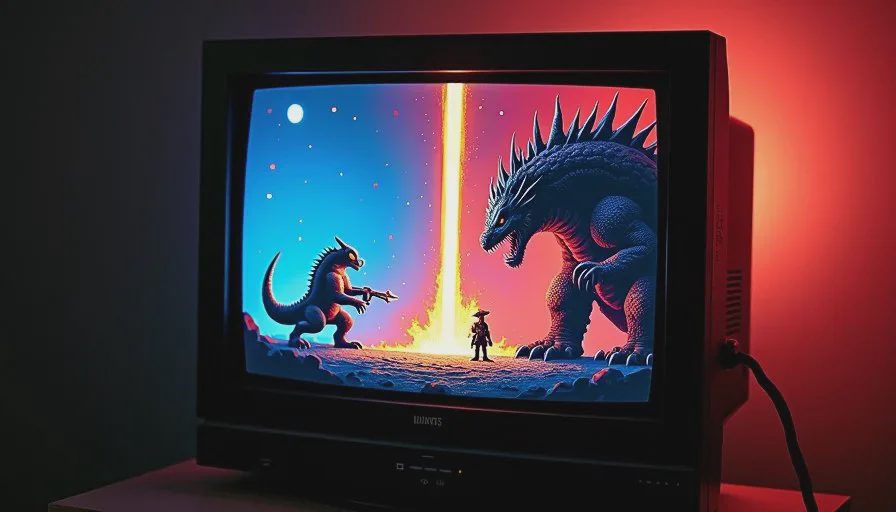
The boss fights we remember as epic are a mixed bag. Some of them earned their legend through design, through music, through context, through the sheer audacity of what they attempted. Some of them borrowed their epic quality from us — from our age, our patience, our willingness to be awed. Both kinds are worth remembering. But if we're going to talk honestly about old games, we have to separate them.
The real ones are still real. They still work. They still make you sit up and pay attention. The borrowed ones are still beloved, but they're beloved as artifacts of a younger self. There's no shame in that. There's no shame in saying a fight was epic because you were fifteen and it was the first time you'd seen anything like it. That's a real experience. It just isn't a recommendation.
Some classics survive contact with adulthood. Some don't. And some boss fights survive contact with adulthood in a strange, partial way — they're not as good as we remember, but they're better than they should be, because they carry the weight of who we were when we first faced them.
That's not a lie. It's a kind of love. And it's worth being honest about.