
There's a phrase I hear constantly in retro gaming conversations, and I've come to dread it. It usually arrives after someone criticizes a beloved old game. The pacing is rough. The controls are clunky. The story doesn't make sense. And then someone says it, with the calm confidence of a person delivering the final word: "It was good for its time."
The phrase is meant to end the conversation. It's a shield against criticism, a way of saying that judging an old game by modern standards is unfair, that we should evaluate it in its original context, that the game deserves credit for what it attempted even if it doesn't hold up now. And sometimes that's true. Sometimes the phrase is earned. But other times — more often than I think we want to admit — it's a cop-out.
This column is about the gap between memory and reality, and that phrase lives exactly in that gap. It's where our affection for what a game meant in 1997 collides with what the game actually plays like in 2026. The question isn't whether historical context matters. It does. The question is whether "it was good for its time" is enough to make a game worth your attention now. And the honest answer is: no, not always.
What the Phrase Is Supposed to Mean
Let me be fair to the phrase before I criticize it. In its best form, "it was good for its time" is a way of acknowledging that games are built within constraints. Technical constraints, design conventions, player expectations, market pressures. A game from 1997 can't be judged by the same technical standards as a game from 2026, because it was made with different tools, for different hardware, under different assumptions about what players wanted.
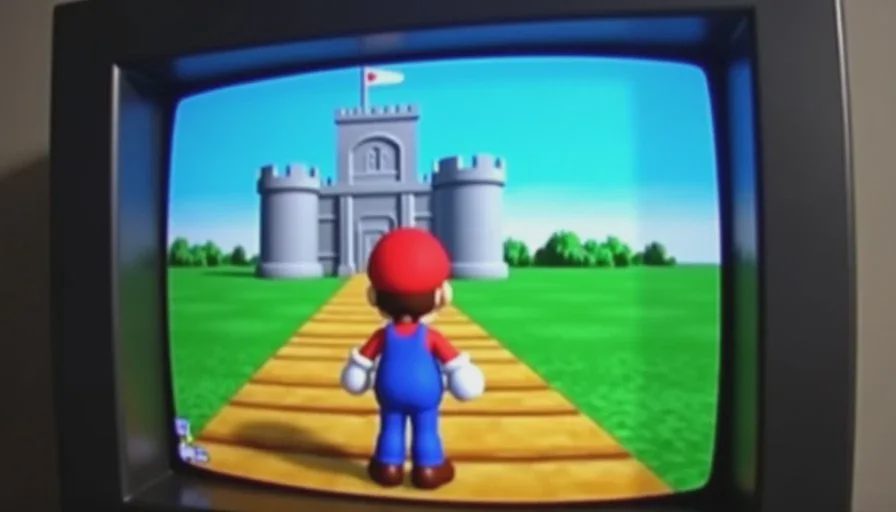
When I say Super Mario 64 was good for its time, I'm acknowledging that it invented a language for 3D platforming that didn't exist before it. The camera system, the movement, the level structure — all of it was being figured out in real time. The game is rough by modern standards, but the roughness is part of the achievement. It was exploring new territory.
When I say the original Resident Evil was good for its time, I'm acknowledging that it helped define survival horror, that its fixed camera angles and tank controls were deliberate choices that created a specific kind of tension, that its limitations were also its identity. The game didn't know how to be anything else, and it didn't need to.
In those cases, the phrase is doing honest work. It's placing a game in its historical moment and saying: this was a breakthrough. This mattered. This deserves respect even if it doesn't play smoothly today.
What the Phrase Actually Does
Here's the problem. The phrase doesn't always mean what it's supposed to mean. In practice, it often functions as a conversation stopper. It's a way of saying "stop criticizing this game" without actually engaging with the criticism. It conflates two different questions.
The first question is: was this game important? Did it influence the medium? Did it matter when it came out? That's a historical question, and the answer is often yes. Many games were important. Many games mattered. That's worth acknowledging.
The second question is: is this game worth playing now? Should an adult with limited free time spend their evening on it? That's a practical question, and the answer is often more complicated. Importance and playability are not the same thing. A game can be historically vital and almost unplayable by modern standards. A game can be a technical breakthrough and a chore to revisit.
When someone says "it was good for its time," they're usually answering the first question while pretending they've answered the second. They're conflating importance with recommendation. That conflation is the problem. It lets us avoid the harder, more honest work of separating what a game meant from what it offers now.
I've done this myself. I've defended games I loved by pointing to their historical context, as if that context made their rough edges disappear. But it doesn't. The rough edges are still there. The camera still fights you. The load times still drag. The controls still feel like wading through mud. Historical context doesn't fix any of that. It just explains it.
The Three Cases Where the Phrase Fails
Let me break down the moments when "it was good for its time" stops being a fair defense and becomes an excuse.
When the Game Wasn't Actually Good for Its Time
The first failure is the simplest. Sometimes we apply the phrase to games that weren't actually good even when they came out. They were mediocre then, and they're mediocre now. The passage of time has just softened our memory of their mediocrity.
This happens a lot with games that had great marketing, or that were popular because of a license, or that filled a gap in a console's library. We remember them fondly because they were part of our childhood, not because they were well made. The phrase "it was good for its time" becomes a way of avoiding the harder truth: it wasn't good. It was just there.
I won't name names, because the point isn't to start fights. But I suspect everyone reading this has at least one game they loved as a kid that, on honest reflection, wasn't actually good. The love was real. The quality wasn't. Those two things can coexist, but we shouldn't pretend they're the same.
When the Game Was Innovative but Not Actually Enjoyable
The second failure is more subtle. Some games were genuinely innovative. They did things no one had done before. They moved the medium forward. And they were also not very fun to play.
This is hard to say about games we respect, but respect and enjoyment are different experiences. A game can be a technical marvel and a slog. It can invent a genre and be bad at being that genre. The original Street Fighter, for example, was a proof of concept that the sequels would refine into greatness. The original alone? Historically significant, technically ambitious, and not particularly good by any standard except curiosity.
When we say "it was good for its time" about these games, we're often saying "it was important" without admitting that importance isn't the same as quality. The game broke ground, and the ground broke it. That's fine. Innovation has value. But the value doesn't transfer automatically to the play experience.
When the Game's Design Choices Were Already Questionable
The third failure is the one that bothers me most. Sometimes a game had design choices that were questionable even at the time. Clunky menus, tedious pacing, unfair difficulty, poor controls — these weren't always the product of technological limitation. Sometimes they were just bad decisions. And we use "it was good for its time" to excuse decisions that players at the time also found frustrating.
Every era had critics and players who noticed these problems. The difference is that, in the moment, we were more willing to tolerate them. We had fewer alternatives. We had more time. We had lower expectations. The frustrations were real, but the context made them survivable.
Now, when we revisit those games and the frustrations resurface, the phrase becomes a defense mechanism. We say "it was good for its time" because we don't want to admit that the game was flawed even when it was new. We don't want to admit that we loved something imperfect, and that the imperfection was always there, waiting for us to grow into the awareness of it.
When the Phrase Is Fair
I don't want to sound like I'm against historical context entirely. I'm not. I'm against using context as a substitute for honest assessment. So let me say clearly when "it was good for its time" is a fair thing to say.
It's fair when the game's flaws are genuinely products of its era. Early 3D cameras, load times, limited save systems, blocky graphics — these were the constraints of the hardware and the conventions of the time. Judging a PS1 game for having a fixed camera is like judging a Model T for not having seat belts. The absence isn't a flaw; it's a reflection of the era.
It's fair when the game's innovations still matter. Some games are worth experiencing because they invented something we now take for granted. Playing them is an education. You understand the medium better after seeing where it came from. That's a legitimate reason to revisit a game, even if the game itself is rough.
It's fair when the game's artistic qualities transcend its technical limits. Some old games are worth playing because they're beautiful, or atmospheric, or emotionally resonant in ways that don't depend on technical polish. The music, the art direction, the writing — these things can age better than the mechanics.
The Harder Conversation
Here's what I want from retro gaming discourse, and what I want from myself when I write this blog. I want us to be able to hold two things at once: respect for what a game meant, and honesty about what it offers now. Those two things don't have to conflict. They can coexist in the same sentence, the same paragraph, the same evaluation.
"A game can be important without being easy to recommend." I've written that phrase many times on this blog, and I mean it every time. It's the alternative to "it was good for its time." It acknowledges the history without hiding behind it. It respects the game's place in the medium without pretending that place makes the game immune to criticism.
The harder conversation is the one where we admit that some of the games we loved aren't worth replaying. Not because they're bad games, but because they've been surpassed, refined, or simply left behind. That admission doesn't diminish the love. It doesn't erase the memories. It just separates the past from the present, and lets each be what it is.
The Honest Take
"It was good for its time" is not always enough. Sometimes it's a fair description. Sometimes it's a loving lie. The difference matters, because the phrase is doing different work in different contexts. It can be a bridge to understanding, or it can be a wall against criticism. It can open a conversation or shut one down.
When I write about old games now, I try to avoid the phrase entirely. Not because it's always wrong, but because it's too easy to hide behind. I'd rather say something specific. What worked then and doesn't work now. What was innovative and what was just convention. What the game meant and what it actually offers. Those specific statements are harder to make, but they're also more honest.
Some games were great for who we were, not who we are now. And some games were good for their time, and that's all they ever were. Both truths are worth saying. Neither one is an insult. They're just the reality of loving a medium that keeps moving forward, even as we keep looking back.
A game doesn't stay good just because you loved it first. And it doesn't stay good just because it was good for its time. It stays good because it still works now, in your hands, on a weeknight, when the hours are limited and the standard is higher. That's the test. Everything else is context.