Memory has a way of compressing time. When I think back to certain games, I remember the high points — the set pieces, the bosses, the twists, the moments that made me feel something. What I don't remember is everything between those moments. The long walks. The repeated animations. The load times. The grinding. The waiting.
That's normal. Memory is not a recording. It's an edit. But when you sit down and actually replay a classic, the edit disappears. You experience the game in real time again, and the pacing becomes impossible to ignore. This column is about five famous old games where that gap between memory and reality is especially wide. Not because the games are bad — all five are important, and I still respect every one of them — but because they feel much slower now than they did when they first came out.
The keyword here is "feel." Speed isn't just about frame rates or load times. It's about the rhythm of play, the density of meaningful decisions, and how long a game asks you to wait between moments that actually matter. Some old games earned their slow pacing because the world was rich enough to justify it. Others were simply products of an era when player time was cheaper. Let me walk through five examples.
GoldenEye 007
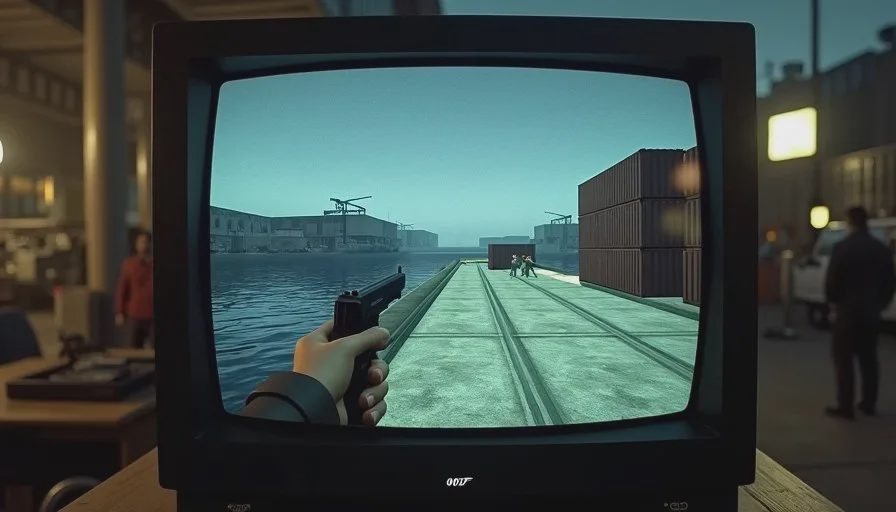
GoldenEye was a phenomenon. I played it for hundreds of hours in the late '90s, mostly in four-player splitscreen, and I still believe it changed console shooters forever. But the single-player campaign, replayed now, is a different experience. The game is slow in ways I had completely forgotten.
Part of it is the hardware. The Nintendo 64 struggled to hold a consistent frame rate, especially in busy scenes. The famous dock level chugs. The jungle runs at what feels like fifteen frames per second. But the bigger issue is the mission structure. GoldenEye asks you to be patient — to wait for guards to move, to line up shots with the clunky aiming system, to backtrack through the same corridors looking for the one objective you missed.
The aiming is the hardest part to revisit. By modern standards, it's almost hostile. You stop, hold a button, drag a cursor, and hope the auto-aim helps. On the old N64 controller it made sense. On a modern pad, it feels like fighting the game. Some sections I remembered as tense now feel like chores. The game is still worth studying, and the multiplayer still has charm with the right group. But the campaign moves at a crawl.
Final Fantasy VIII
I already mentioned this game in a previous piece, but it belongs on this list because it's the clearest example of a JRPG that wastes player time through its core systems. Final Fantasy VIII has a brilliant soundtrack, a memorable opening, and some genuinely ambitious ideas. But the combat is built around the Draw system, and the Draw system is slow.
In most JRPGs, a standard fight takes thirty seconds. In Final Fantasy VIII, that same fight can take three minutes if you're drawing magic to stock up your junctions. The animation plays every time. The enemy counters. The menu cycles. It's not difficult — it's just long. And because the game scales enemies to your level, there's no real benefit to grinding. You're spending time to make numbers go up so you can watch more numbers go up.
The pacing problem extends beyond combat. The story has long stretches of exposition, and the game regularly locks you into slow-moving sequences — the train mission, the flashback sequences, the final dungeon's gimmick. When I replayed it last year, I found myself checking my phone during battles. That's not a good sign. Final Fantasy VIII is a game that wants to be cinematic, but its moment-to-moment play fights against the cinema.
Shenmue
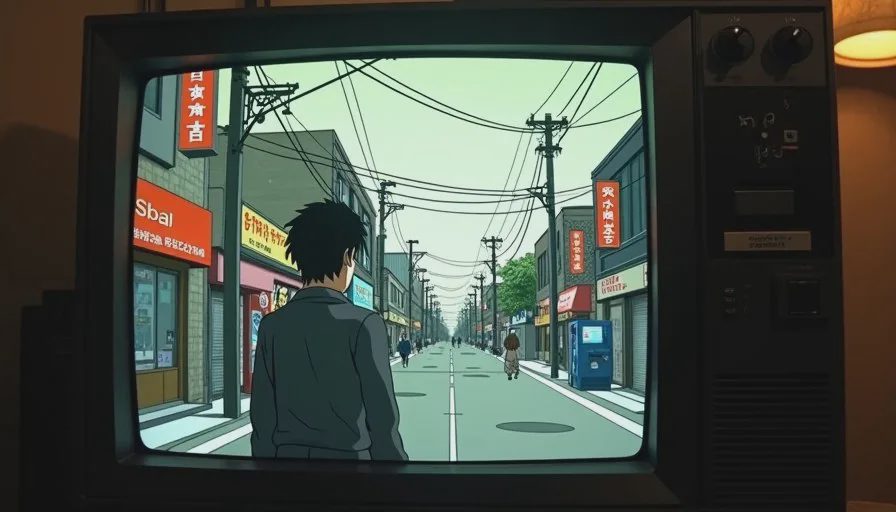
I'm going to write a full Second Run piece on Shenmue later, but it has to be mentioned here because it might be the slowest famous game ever made. Shenmue was designed around realism, and realism means waiting. You wait for stores to open. You wait for buses. You walk from one end of Dobuita to the other at a pace that feels like a funeral procession. The game asks you to fill your time with forklift driving, capsule toys, and conversations that go nowhere.
In 1999, this felt immersive. In 2026, it feels like a test of patience. The game's ambition is undeniable — the town feels alive, the music is lovely, and the atmosphere is strange and singular — but the pacing is glacial. The first few hours are almost nothing but walking and talking. The actual gameplay is thin, and the game seems proud of that. I respect what Shenmue tried to do. I just don't enjoy doing it.
The core problem is that Shenmue treats real time as a meaningful resource, but it doesn't fill that time with meaningful decisions. You're not planning routes or solving problems. You're mostly waiting for the clock to hit the right hour so the next scripted event can happen. That's not pacing. That's padding disguised as realism.
The Legend of Zelda: Ocarina of Time
This one is harder to admit, because Ocarina of Time is one of the most important games ever made. It set the template for 3D action-adventure games. It's still beloved for good reason. But the pacing of the opening hours is slower than most people remember, and certain sections drag in ways that feel impossible to ignore now.
The early game is full of tutorials. Navi interrupts constantly. The dialogue boxes scroll at a fixed pace, and you can't skip most of them. The first dungeon is gentle to the point of being tedious for returning players. The sections between dungeons — running across Hyrule Field, navigating the Lost Woods, dealing with the owl's endless dialogue — eat time without offering much in return.
Hyrule Field is the biggest pacing problem in hindsight. It's a large empty space connecting the interesting areas, and every trip across it takes longer than it should. I understand why it felt magical in 1998 — a seamless 3D world was new — but now it just feels like a commute. Ocarina of Time is still a great game, but it's a great game wrapped in a slow one.
Resident Evil (1996)
The original Resident Evil belongs on this list for one word: doors. Every door in the game triggers a loading screen — a slow, creaking animation of a door opening that lasts several seconds. You will open hundreds of doors over the course of a playthrough. The math is brutal. If each door animation takes five seconds, and you pass through two hundred doors, that's over sixteen minutes of pure door-watching. Sixteen minutes of your life spent watching a handle turn.
Add to that the tank controls, the fixed camera angles, the limited inventory, and the need to backtrack constantly to item boxes, and the game becomes a study in friction. The atmosphere is still effective. The Spencer Mansion is a genuinely creepy space, and the sound design holds up. But the pacing is molasses. The 2002 remake improved some of this, but the original is a hard replay for modern players.
The thing about Resident Evil is that the slowness was part of the horror. The game didn't want you to move quickly. It wanted you to feel the weight of every door, every hallway, every turn. And in that sense, the slowness worked. But there's a difference between deliberate tension and simple inefficiency, and the original game doesn't always know the difference.
What the Slowness Actually Means
I want to end this piece without snark, because these games matter to me. The slowness I'm describing isn't a moral failing. It's a product of context. These games were made in an era when games were expected to last a certain number of hours, when loading times were accepted as normal, and when players had fewer things competing for their attention. The design choices that feel slow now were often considered immersive or valuable then.
But the hard truth about replayability is that we don't live in that era anymore. When I sit down to replay a classic, I'm bringing my adult attention span, my adult schedule, and my adult tolerance for friction. The games haven't changed. I have. And the gap between those two things is exactly what this column exists to explore.
Some of these games are still worth replaying. GoldenEye has moments. Final Fantasy VIII has a great soundtrack. Shenmue has atmosphere. Ocarina of Time has structure. Resident Evil has tension. But none of them feel as fast as I remembered. The memory edit removed the waiting. The replay put it back.
A game can be important without being easy to recommend. And sometimes, it can be important without being easy to sit through. That's not an insult. It's just the truth about what happens when we go back.