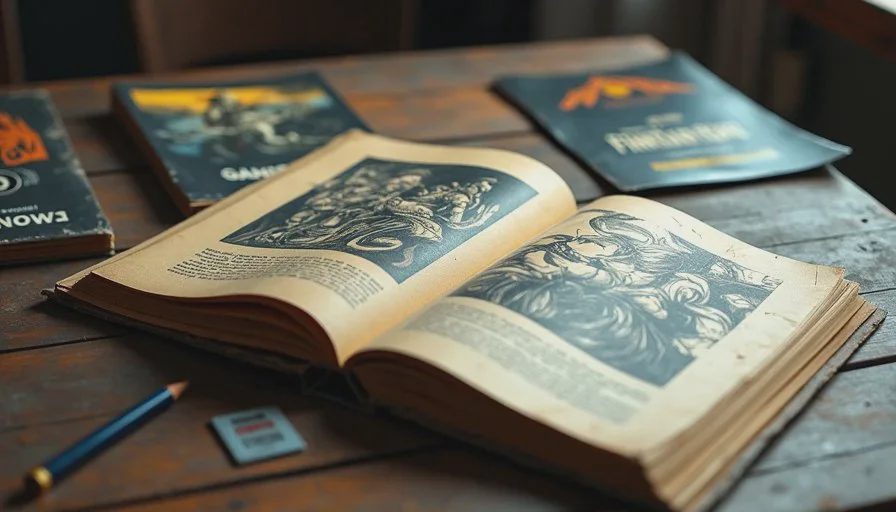
There was a ritual that came with every game purchase in the '90s, and it didn't happen on a screen. You'd buy the game, get back in the car, and before you ever touched a controller, you'd open the manual. Not to read the controls — though you'd get there eventually — but to look at the art. To read the character bios. To study the maps, the enemy descriptions, the little bits of story that set up the world you were about to enter.
The manual was the threshold. It was the first piece of the game you actually held, and for a kid in the back seat of a car, it was the only way to play the game before you could play the game. Those pages did more than explain mechanics. They built the world. They set the tone. They told you who you were, where you were, and why any of it mattered.
I've been thinking about manuals a lot lately, partly because I've been rebuilding a small collection of retro games, and partly because I realize how much of my love for those worlds was planted by paper before pixels ever got involved. This column is about that. About why old game manuals did half the worldbuilding, and why their absence still matters.
The Manual as Storyteller
Let me start with a specific example, because I think it illustrates the point better than any abstract argument. The manual for the original Final Fantasy VII on PS1 was a substantial booklet. Not a pamphlet — a small book. And inside it, before you ever pressed start, you learned about Midgar. You learned about Shinra. You learned about the Lifestream, the reactors, the different districts of the city. The manual didn't just tell you how to equip materia. It told you what materia was, where it came from, and why it mattered to the people living in that world.
The game itself would eventually explain some of this, but the manual gave it to you first. It framed the experience. When you finally saw Midgar on screen for the first time — the towering plates, the glowing reactors, the slums below — you already had a vocabulary for what you were seeing. The manual had taught you how to read the world.
That's what manuals did. They weren't just reference material. They were primers. They prepared you to enter a space and understand it. In an era when games couldn't show everything — when technical limitations meant that worldbuilding had to be delivered through text, through menus, through imagination — the manual carried a huge share of the narrative weight.
The Manual as Artifact
Beyond the storytelling, there was the physical object itself. A manual had weight. It had paper, ink, and a specific smell — that combination of fresh print and new plastic from the case. It had layout and typography, illustrations and diagrams, sometimes a full-color character spread in the center. It was designed, and the design was part of the experience.
I still have a small stack of manuals from games I bought new. The Legend of Dragoon manual has a section on each character, with a full-page illustration and a short bio that reads like a fantasy novel excerpt. The GoldenEye manual has weapon descriptions that read like a spy's field guide. The manual for Metroid Fusion, much later, opens with a story that reads like a log entry, pulling you into the fiction before the title screen even appears.
These were not afterthoughts. They were produced with care, often by the same artists and writers who worked on the game. And because they were physical, they had a permanence that digital content lacks. A PDF of a manual is useful, but it's not the same. It doesn't have the crease in the spine, the worn edges, the page you dog-eared because it had the enemy weakness chart you kept checking.

What Manuals Knew That Games Couldn't Show
Here's the deeper point, and it's one I've thought about a lot as I've replayed old games. The technical limitations of the era meant that games often couldn't communicate everything visually. A PS1-era RPG couldn't render a character's face in enough detail to show you who they were emotionally. A 16-bit platformer couldn't build a world through environmental storytelling alone. The manual filled those gaps.
The Chrono Trigger manual explained the concept of time periods before you ever stepped through a gate. The Metal Gear Solid manual included a full briefing — mission objectives, character dossiers, weapon schematics — that made you feel like you were being briefed for a real operation. The Resident Evil manual included a police report and a letter from a missing person, pure fiction delivered as documents that you could hold and read before the game even started.
This is what I mean when I say manuals did half the worldbuilding. They carried the lore, the tone, the context, the atmosphere. They set the table. The game then sat you down and served the meal. Without the manual, the game could still work — most old games are perfectly playable without their booklets — but the experience was thinner. The world felt less substantial. The manual was the foundation, and the game was the structure built on top of it.
The Loss of the Manual
When manuals disappeared — and they disappeared slowly, shrinking from full booklets to folded inserts to nothing — something real was lost. Not just information, but anticipation. The ritual of opening the case on the ride home. The smell of fresh ink. The feel of the pages. The way the manual made the world feel real before you ever saw it rendered on screen.
Modern games have replaced the manual with tutorials, loading-screen tips, in-game codex entries, and wikis. None of that is bad. Codex entries can be beautifully written, and tutorials can teach mechanics more effectively than any printed page. But the context is different. A codex entry appears after you've already seen the thing it describes. A loading-screen tip flashes by while you're already playing. A wiki is something you consult, not something you're given.
The manual was a preface. It was the thing that came before, that set the stage, that told you the world existed before you arrived and would continue after you left. That's a subtle but profound difference. It made the game feel like a place you were entering, not a system you were operating.
A Practical Appreciation
I want to be clear that this isn't just nostalgia. I'm not saying old game manuals were uniformly great, or that every manual was a work of art. Plenty of them were thin, poorly written, or barely functional. But the best ones — the ones that understood their role — did something that's still worth studying.
They understood that worldbuilding is cumulative. It's not just what happens in cutscenes or dialogue. It's everything: the item descriptions, the enemy names, the map labels, the little bits of flavor text scattered throughout. The manual was one more surface for that worldbuilding to live on, and the good ones used every inch of it.
They also understood that a game begins before the game begins. The anticipation of playing — the drive home, the opening of the case, the reading of the manual — was part of the experience. Modern games have tried to replicate this with marketing campaigns, teaser trailers, and online ARGs, but it's not the same. The manual was personal. It was yours. It came in the box you bought with your own money, and it belonged to the game in a way that a YouTube trailer never can.
What the Manuals Left Behind
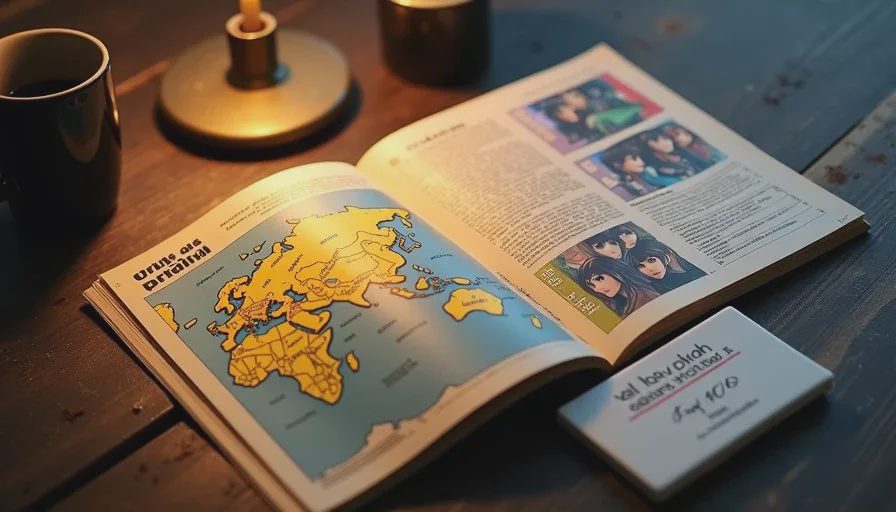
I'm not calling for a revival of printed manuals. That ship has sailed, and I understand why. Printing is expensive, digital distribution is convenient, and most players don't read instructions anyway. But I do think we should acknowledge what the manuals left behind, because it's still with us.
The best retro game worlds — the ones that still hold up when we replay them — were often built in collaboration between the game and the manual. The manual gave us context. The game gave us experience. Together, they created something richer than either could alone. When I replay an old favorite now, I keep the manual nearby. Not because I need the instructions, but because the manual is part of the game. It's the piece of the world I can hold in my hands.
Some classics survive contact with adulthood. The manuals that accompanied them survive too, yellowed and creased, still carrying the weight of the worlds they helped build. They remind us that games used to be physical, that worlds used to arrive on paper before they arrived on screens, and that half the worldbuilding happened before you ever pressed start.
That's not a small thing. It's half the reason the world felt real at all.