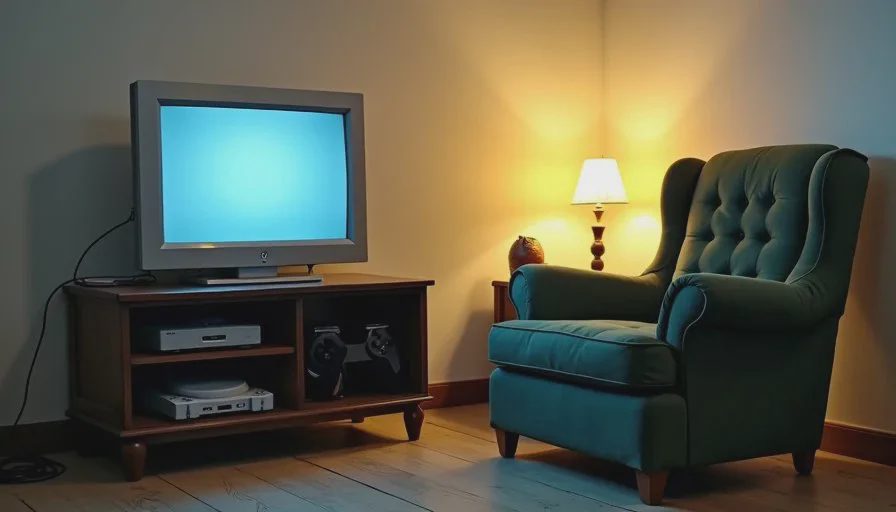
I have a confession to make, and it's one that might sound strange coming from someone who writes about retro gaming. I don't want a museum. I don't want a room full of consoles behind glass, shelves of sealed games, or a collection that looks like it belongs in a YouTube background. I want a space that feels lived in. A corner of the house where the hardware still gets used, where the controllers have worn thumbsticks, where the CRT hums because it was turned on last night, not because it's on display.
This is a harder line to walk than it sounds. Retro hardware collecting has a way of becoming a monster. It starts with one console and a few games, and before you know it you're driving across town to pick up a broken Sega Saturn because the price was too good to pass up. I've been there. I've made the mistakes. What I've learned in the years since is that collecting retro hardware without turning your house into a museum is not about restraint for its own sake. It's about building a relationship with the hardware that's still active. That's what I want to write about.
The Trap of the Complete Set
Let me start with the biggest trap, because it's the one that catches almost everyone. The complete set. The idea that your collection isn't done until you have every console, every color variant, every limited edition. It's a seductive goal because it's concrete. It gives you a checklist. It makes progress feel measurable.
But the complete set is a museum mindset. It treats hardware as objects to be accumulated rather than tools to be used. A complete set of Game Boys, all lined up on a shelf, is impressive. But most of them will never be played. They're artifacts, not instruments. And once you start collecting artifacts, the house starts feeling like a display case.
I know a guy — a good guy, a genuine enthusiast — who has every Sega console ever released in North America. They're all connected to a switcher, all in working order. I visited his house once, and I asked him how often he plays the Saturn. He said, "Maybe twice a year." Twice a year. For a console that cost him three hundred dollars to acquire in good condition, plus the games. That's not collecting. That's archiving.
There's nothing wrong with archiving, if that's what you want. But it's not what I want, and I suspect it's not what most adult retro gamers want. We want to play the games. We want the hardware to be present in our lives, not preserved in stasis.
The Functional Setup Principle
The rule I've settled on after years of trial and error is simple: every piece of hardware in my house has to earn its space. If it's not connected to a display, if it's not ready to turn on, if I can't be playing it within five minutes of deciding to — then it's not part of my setup. It's inventory.
This rule changed everything. It forced me to be honest about what I actually play. The Dreamcast stays connected because I love the Dreamcast. The SNES stays connected because it's the console I return to most. The PS1 stays connected because it's the backbone of this blog. The N64, the Genesis, the GameCube — they went into storage, then eventually to new homes.
Here's what I found: a smaller setup gets used more. Not because the hardware is better, but because the friction is lower. When you have one console connected to one CRT, you just sit down and play. When you have six consoles connected through a switcher, you spend ten minutes figuring out which input is active, which controller you need, whether the wires are tangled. The friction kills the impulse.
The Question of Duplicates
Duplicates are the most common form of retro hardware clutter, and they're the hardest to resist. A spare PS1 because the laser might die. A backup Dreamcast because they're getting expensive. A second CRT because someone was giving it away. The logic always feels sound in the moment.
I've had duplicates. I've justified duplicates. And here's what I've learned: they're almost never worth it. Unless you're deep into hardware repair, a spare console is just a box that takes up space. The PS1 laser will probably outlast your interest in replacing it. The Dreamcast won't fail the week you need it. The CRT you grabbed for free will sit in the garage, gathering dust and guilt.
There are exceptions. If you have a console that's genuinely rare and you use it constantly, a spare parts unit makes sense. If you're running a retro gaming night and need backup hardware, fine. But for most of us, duplicates are fear collecting. They're the hobby saying "what if" instead of "what now." I've sold or given away every duplicate I've ever owned, and I've never missed one.
The Display Problem
Here's the part that actually turns a house into a museum: display. It's not the hardware itself — it's the shelving, the lighting, the arrangement. When you start treating your games like gallery pieces, the room stops feeling like a place to play and starts feeling like a place to look.
I've gone through phases of this. I had shelves with consoles arranged by generation, each one dusted and polished. It looked great in photos. It was also deeply unsatisfying to actually use, because the displays were too neat. I didn't want to disturb them. The collection had become a diorama, and I was its curator.
The fix, for me, was to stop displaying and start staging. Staging means arranging hardware so it's ready to use, not ready to admire. The controllers sit next to the consoles, not in drawers. The games are organized by how often I play them, not alphabetically. The CRT has a chair in front of it, not a velvet rope. Staging is about function. Display is about form. Function invites you in. Form asks you to stand back.
Letting Go of the Boxes
The boxes are the final boss of retro hardware collecting. Every console came in a box, and those boxes are now valuable, and the instinct is to keep them all. But boxes are the fastest way to turn a functional space into a storage locker. They're bulky, they're fragile, and they serve exactly one purpose: resale value.
I sold my boxed SNES five years ago. It was hard. The box was beautiful — the artwork, the wear, the sense of history. But it was sitting in a closet, doing nothing. The console was on the shelf, being used. The box was a ghost, and I was paying rent to keep it.
If you're a serious collector with a dedicated space, boxes make sense. But if you're a player with a corner of the living room, let them go. Keep the console. Keep the games. Keep the controller. The box is not the hardware. It's packaging. And packaging is only worth keeping if you're running a museum.
What My Setup Looks Like Now
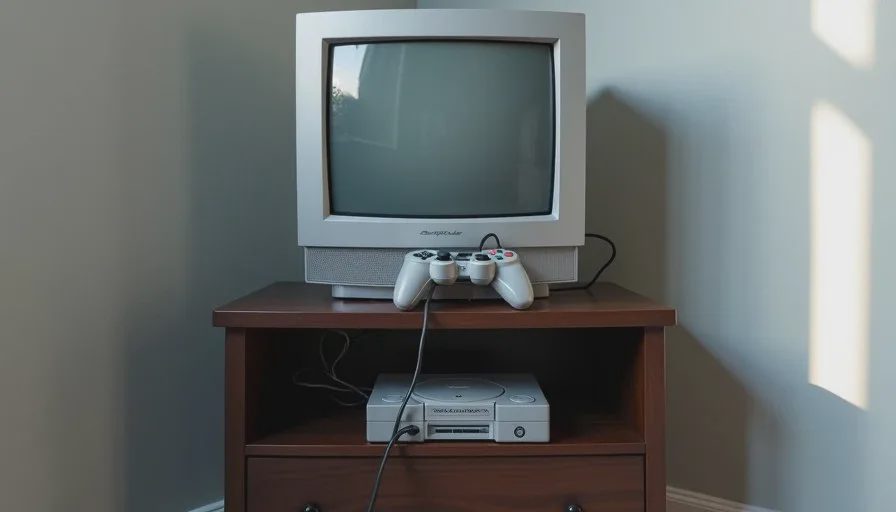
Let me give you a concrete picture, because I don't want this to feel like a lecture. My setup is in the basement. It's one wall, maybe eight feet wide. On the left, a small CRT on a low wooden stand — a 21-inch Trinitron I found on a curb and fixed with a simple geometry adjustment. Under the stand, two consoles: the PS1 and the Dreamcast, both connected, both ready to play.
Next to the TV is a single shelf. Not a bookshelf — a small, three-row shelf that holds the games I actually rotate through. Maybe forty games total. Some PS1 discs, some Dreamcast games, a handful of SNES carts. Nothing rare. Nothing sealed. Everything has been played in the last year, or it moves on.
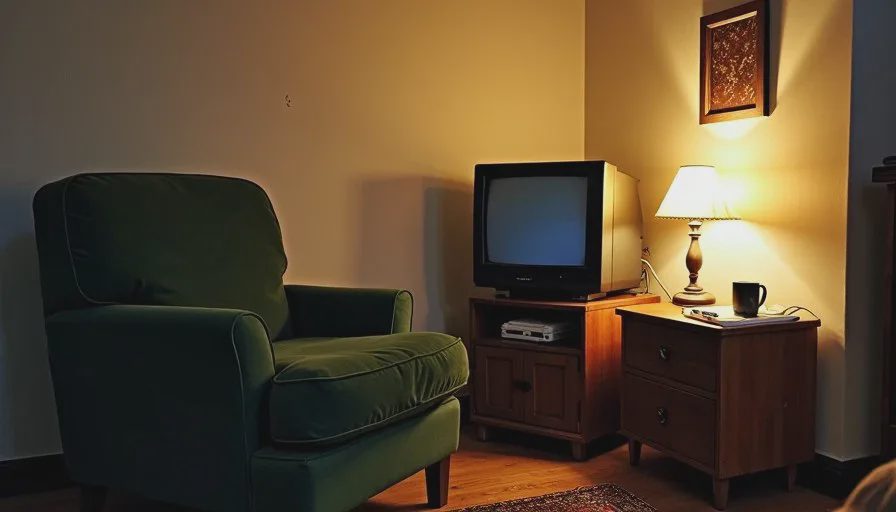
In front of the TV is a chair — an old green armchair that's held up better than I expected. There's a small table next to it for coffee and a notebook. That's it. No LED strips. No glass cases. No wall of consoles. Just a place to sit and play.
The Honest Take
Collecting retro hardware without turning your house into a museum is not about having less. It's about having enough — enough hardware to play the games you love, enough space to live in, enough discipline to know the difference between a tool and an artifact. The museum impulse is real, and it pulls at all of us. But it's not the only way to love retro gaming.
I don't want my daughter to grow up in a house where the games are behind glass. I want her to grow up in a house where the CRT glows on a Tuesday night, where the Dreamcast gets turned on because she asked to play, where the hardware is part of the furniture of life, not a shrine to the past. That's what retro hardware collecting can be. Not a museum, but a living room. A place where the old machines still work, not because they're preserved, but because they're loved.
Some classics survive contact with adulthood. The same is true of the hardware. It survives when it gets used. It survives when it earns its place. It survives when we stop treating it like a collection and start treating it like what it was always meant to be: a way to play.