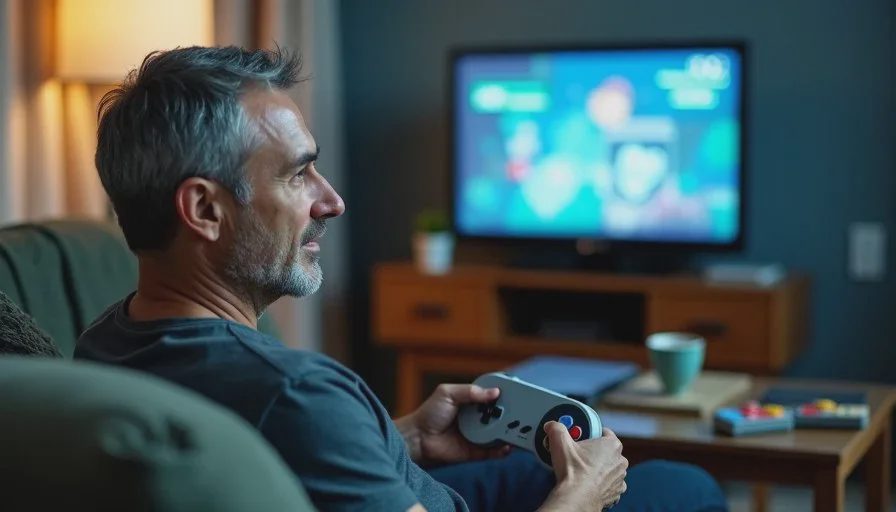
I’m Curtis Bellamy. I’m 41, I live in Milwaukee, Wisconsin, and I’ve been playing video games long enough to remember renting cartridges on Friday nights and reading instruction manuals in the back seat on the way home. The SNES era raised me. The PS1 and Dreamcast years shaped my taste. Early PC gaming taught me patience, troubleshooting, and the quiet thrill of a game that runs only after you fiddle with settings for half an hour.
I still go back to those games. Not as a collector showing off shelves, but as a player with limited time and a clear question. The question is this: do old games still hold up? Not "were they important?" or "did we love them?" — but when you sit down tonight, with work tomorrow and maybe an hour to spare, is this game actually worth your time?
That's the question After the Save exists to answer. And I want to be honest about why I'm writing this blog, because the retro gaming space already has plenty of noise. It has hype merchants who treat every classic as sacred. It has grifters who tear down beloved games for clicks. What it has less of is the thing I need most: a calm, grown-up conversation about what actually survives contact with adulthood.
The Problem With Replaying Old Games as an Adult
When I was fifteen, I could spend an entire Saturday grinding through a JRPG and call it a good day. I remember one winter weekend, maybe 1998, when I played an import turn-based game for eleven hours straight, only stopping to eat cereal and re-read the same paragraph of a guide I'd printed from a dial-up forum. That kind of time no longer exists for me. I'm an operations manager at a regional packaging company. I solve practical problems all day. I'm married, my daughter is ten, and my free time arrives in fragments — an hour here, forty minutes there, usually after nine p.m. with a cup of coffee I know I shouldn't have made at that hour.
Replaying old games as an adult is a different sport. The patience is thinner. The taste is sharper. The memory is unreliable. That last part matters more than most people admit.
I learned this the hard way with a game I used to love. I won't name it yet — that's a post for another day — but I loaded it up expecting to feel sixteen again. Instead I felt annoyed. The pacing was sluggish, the save system punished my limited time, and the thing I remembered as "deep" turned out to be mostly menus. I didn't hate the game. I just realized I'd been lying to myself about why I loved it.
That moment stuck with me. It made me wonder how many other classics I'd been holding onto without actually replaying them. So I started doing exactly that — replaying them, one by one, and writing down what I found. Not what I remembered. What I found.
The Night I Stopped Defending a Memory
Let me give you a real example, without ruining the full essay I have planned. A few months ago, I sat down with a beloved action RPG from the late '90s. I remembered it as atmospheric, clever, emotionally heavy. I remembered the opening hour as gripping. What I found instead was forty minutes of slow text, a combat system that felt mushy, and a camera that fought me in the first interior room. I kept telling myself it would get better. It did get a little better. But it never matched the version in my head.
That experience taught me something important. The game hadn't changed. I had. And that's not a problem — it's a fact. The problem only starts when I refuse to admit it. I think a lot of retro gaming discourse falls apart exactly there: we're so loyal to the memory that we stop seeing the game.
This blog is my attempt to do better. To sit with the old thing in front of me and describe what's actually there. The good, the bad, the dated, the still-brilliant. Some classics survive contact with adulthood. Some don't. Both outcomes are worth writing about.
What This Blog Won't Do
I'm not here to tear games down for sport. There's enough rage-bait content about "overrated classics" already, and it's boring. A game can be important without being easy to recommend, and I'd rather explain that tension than pretend it doesn't exist.
I'm also not here to sell you nostalgia. Nostalgia is a feeling, not an argument. Saying "this game was great because I played it in my basement in 1997" tells you nothing about whether it works now. I'll respect the emotional attachment — I have plenty of it — but I won't let it override what's on the screen.
Here's what you can expect from me:
Honest replay essays that take the game seriously but not sacredly.
Plain-English explanations of why certain design choices aged the way they did.
No scores, no rankings, no "top ten" churn.
A willingness to say "this doesn't hold up" without treating that as a betrayal.
A willingness to say "this still works" even when it's unfashionable to admit it.
The signature line of this blog is simple: a game doesn't stay good just because you loved it first. I believe that. I also believe the opposite is true — a game doesn't stop being good just because it's old.
Why I Write at Midnight
My best writing happens late, after the house gets quiet. That's when the memories are loudest and the excuses are fewest. I'll be honest: some nights I start a post expecting to defend a game, and by the third paragraph I realize I can't. Other nights I load up something I expected to dismiss, and it surprises me.
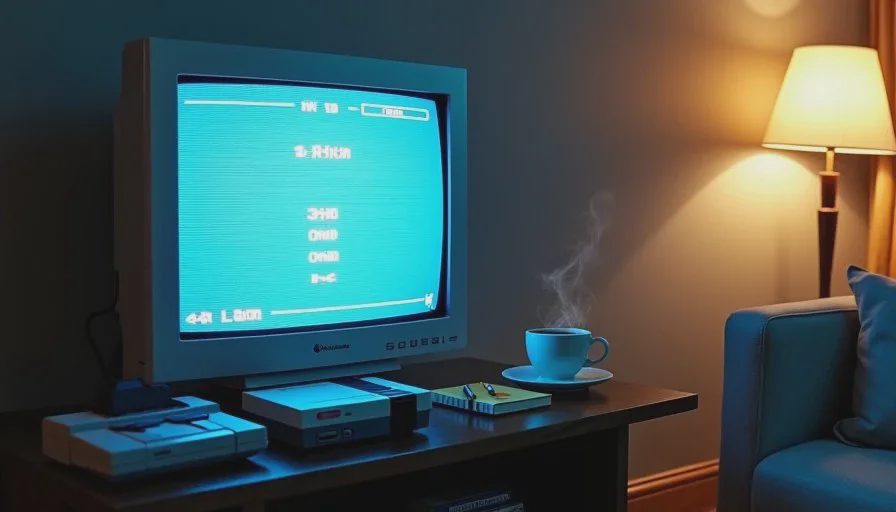
There's a rhythm to it now. I make the coffee too late. I boot up an old console or an emulator. I let the opening screen sit for a minute before I press start, just to see what the atmosphere does. Then I play for two hours, sometimes three, and I take notes by hand in a cheap spiral notebook. The notes get messy. They include timestamps, small frustrations, moments that landed, lines I'd forgotten, mechanics that felt better or worse than I remembered.
Later, I type the notes into something readable. But the first draft always happens by hand, with the CRT humming and the house silent. It keeps me honest. It keeps the writing close to the actual experience.
Who This Blog Is For
This blog is for people who grew up with old games and still think about them, but don't have time to waste on dishonest takes. If you're in your late twenties to mid-forties, if you've got a job and maybe a family, if you remember when games came in cardboard boxes and didn't patch themselves, then you're probably the reader I'm writing for.
You don't need another ranking list. You don't need someone to tell you that the game you loved is actually bad, or that it's secretly the greatest thing ever. You need someone to sit down with the thing, play it with adult eyes, and report back clearly. That's what I'm doing here.
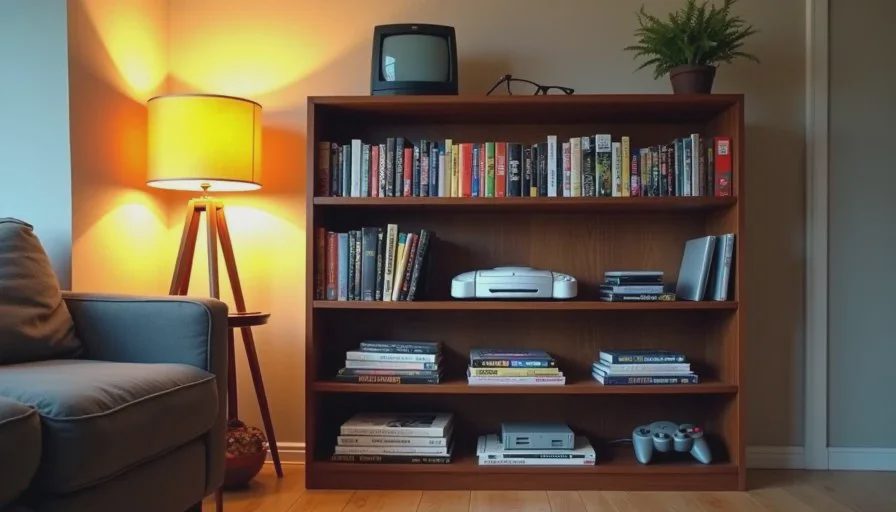
This blog has four columns, each with a different rhythm. There are long weekly replay essays, shorter memory-versus-reality checks, pieces about CRTs and hardware and the texture of old games, and personal essays about what it means to keep playing after the hype fades. They all serve the same purpose: to figure out what actually still works, and to say so without drama.
Some games were great for who we were, not who we are now. That's not an insult. It's just the truth. And it's a truth worth writing down.
If any of that sounds like a conversation you'd want to have, stick around. We'll replay some things together, and we'll be straight about what we find.