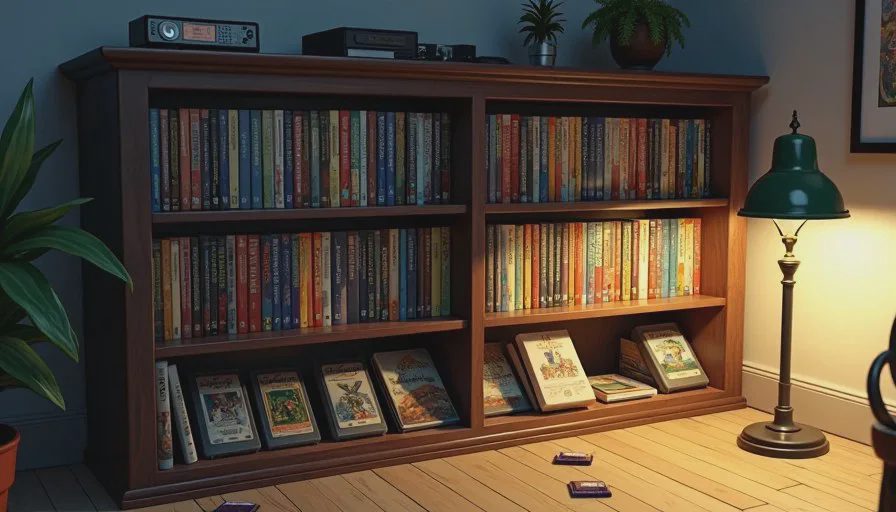
There was a version of me, maybe between the ages of thirteen and twenty-two, who finished every JRPG he started. Not most of them. Every single one. I didn't care if the game was good. I didn't care if the story fell apart in the third act or if the final dungeon was a tedious slog. If I put the disc in, I saw the credits. That was the rule. That was who I was.
That person is gone now. I noticed it slowly, the way you notice a friendship fading — not all at once, but in small accumulating moments. A game I started with genuine excitement would sit untouched for a week. Then a month. Then I'd admit I wasn't going back. The first time it happened, I felt guilty. The twentieth time, I started to wonder if something in me had broken, or if something had finally gotten honest.
The Completionist Era
Let me tell you what it used to feel like. Starting a JRPG in the late '90s was an event. The game came in a case with a manual, and the manual had character art and world maps and sometimes a section of enemy data. I'd read the manual on the ride home, then spend the first hour just setting up my party, reading the menu screens, testing the battle system. The opening hours were a ritual.
And I finished everything. Xenogears. Chrono Cross. Final Fantasy VII through IX. Suikoden. Wild Arms. Legend of Dragoon. Grandia. Some of those games are great. Some of them are not. It didn't matter. I finished them because finishing was the point. The game was a world, and I wanted to see the whole thing. I wanted to close every door.
My friends were the same way. We'd compare progress at school, trade strategies for boss fights, argue about which optional character was worth recruiting. There was a social pressure to finish, but it wasn't external. It came from us. We didn't want to be the person who gave up. We wanted to be the person who could say, "Yeah, I beat it." The credits were a kind of proof.
The First Unfinished Game
The first JRPG I ever abandoned was Final Fantasy XII. I was in my mid-twenties by then, working my first real job. I'd been excited for the game for years. I bought it on launch day, started it that night, and played for maybe fifteen hours over two weeks. Then I stopped.
I didn't stop because the game was bad. I stopped because I realized I didn't know why I was playing it. The story hadn't grabbed me. The characters felt distant. The battle system was interesting but not interesting enough to justify the time. I kept thinking about other things I could be doing — other games, books, people, sleep. For the first time in my life, finishing a JRPG felt like a chore instead of a reward.
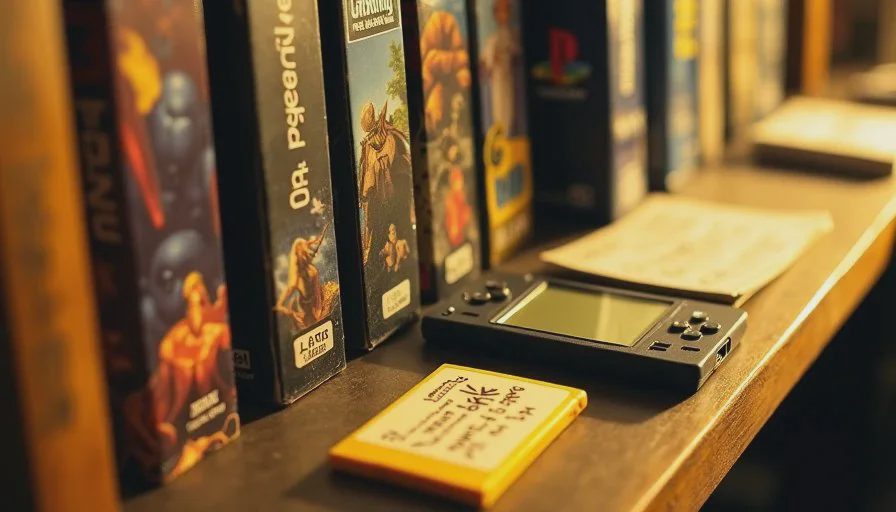
I told myself I'd go back. I put the disc in its case and set it on the shelf where I could see it. It stayed there for a year. Then I sold it. The guilt was real, but it faded. And something else took its place: relief.
What Actually Changed
Here's the part where I could make this simple. I could say "I grew up, I got busy, I don't have time anymore." That's true, but it's not the whole truth. The time issue is real — I'm married, I have a daughter, I work full-time — but I still play games. I still play long games. The difference isn't just hours. It's what the hours mean now.
When I was sixteen, time felt infinite. A sixty-hour JRPG wasn't a cost; it was a promise. It meant the world would still be there tomorrow, and the next day, and the day after that. I didn't think about whether the game respected my time because I had so much of it to give.
Now time feels finite. Not in a morbid way, but in a practical one. An hour of gaming is an hour I'm not spending with my daughter, or my wife, or on my own reading. That doesn't mean the hour is bad. It means it has weight. And a JRPG that asks for sixty of those hours better be giving me something real in return — not just length, not just systems, but something that justifies the trade.
That's the shift. I didn't stop finishing JRPGs because I lost interest in games. I stopped because I got clearer about what I wanted from them. Completion for its own sake stopped being enough.
The Difference Between Guilt and Regret
I want to be honest about something, because I think it gets misread a lot. I don't regret the games I didn't finish. I don't stay up at night thinking about the JRPGs that got away. What I feel now, when I look at my shelf of unfinished games, is more like a quiet acknowledgment. These games weren't for me, or they weren't for me right now. That's not a moral failure. It's just a mismatch.
The guilt I felt in my mid-twenties was really about identity. I had thought of myself as a person who finishes things. When I stopped finishing games, I worried that meant I'd become someone who quits. But I don't think that's what happened. I think I became someone who chooses. And choosing means saying no to some things so you can say yes to others.
There's a difference between quitting and curating. Quitting is passive — you stop because you're frustrated or bored and you don't think about why. Curating is active — you stop because you've decided this particular experience isn't worth what it's asking for. I used to quit games. Now I curate them. The distinction took me years to learn.
What I Still Love About the Genre
None of this means I've abandoned JRPGs. I still play them. I still finish some of them. But I finish them now for different reasons.
The ones that hold my attention are the ones that respect my time without sacrificing depth. A tight forty-hour JRPG with a strong story and meaningful choices can still pull me in completely. It's not about length. It's about whether the game is using its hours well. Some games are long because they have a lot to say. Others are long because no one edited them. I can tell the difference now.
I also love replaying the old ones, even knowing I won't finish them. That's a strange thing to admit, but it's true. I'll load up a PS1-era classic, play for five or ten hours, and stop. Not because I'm disappointed. Because I got what I came for. The music. The atmosphere. The feel of the battle system. The memory of who I was when I first played it. Some games are better as revisits than as completions.
The Part of Me That's Still There
So what happened to the part of me that used to finish every JRPG? I don't think it died. I think it grew up. It learned to ask questions it never asked before. Is this worth my time? Is this making me feel something? Is this a story I want to live in, or just a system I'm feeding?
Those questions would have sounded cold to me at sixteen. They sound honest to me now. I've made peace with the fact that I won't finish most of the games I start. That's not a loss. It's a kind of clarity.
I still remember the feeling of beating a JRPG for the first time. The credits rolling. The music swelling. The sense that I'd traveled somewhere and come back changed. I don't get that feeling as often anymore. But when I do, it means more. Because it's earned against everything else the hours could have been.
Some games were great for who we were, not who we are now. And some parts of us were great for who we were, too. The completionist in me served his purpose. Now he rests, and I choose.