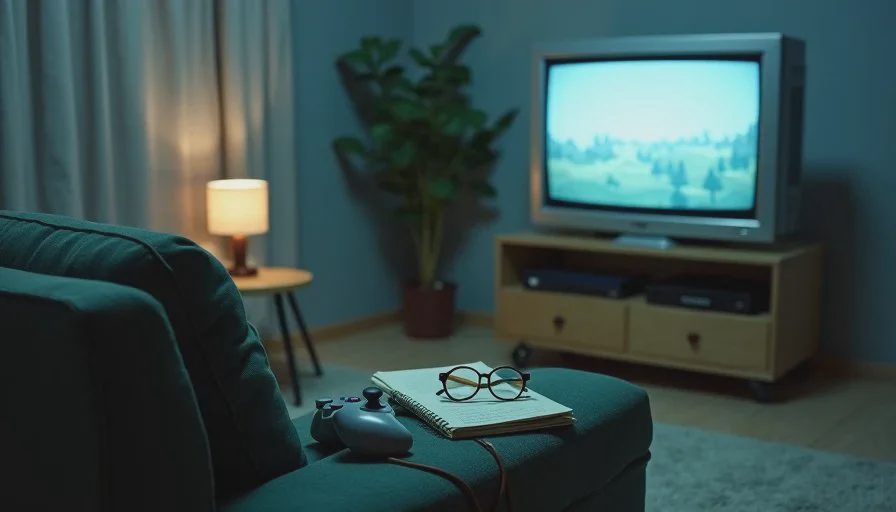
I used to love long games. Not just long games — sprawling, demanding, sink-your-whole-summer-into-them games. The kind with forty-hour main stories and another forty hours of optional content. The kind that asked you to grind, to farm, to backtrack, to optimize. I loved the feeling of being swallowed by a game, of living inside it for weeks at a time. That was the point. The length was the feature.
I'm forty-one now, and I still love games. But the kinds of games I love have changed, and the change didn't happen by choice. It happened by attrition. It happened by sitting down night after night with less time and more weariness, and slowly realizing that some of the things I used to value — length, complexity, difficulty for its own sake — don't hit the same way anymore. What replaced them was something quieter. Something I didn't expect.
What I Used to Want From Games
Let me describe the player I was at eighteen, because he's the baseline for everything that changed. He wanted games that consumed him. He wanted mechanics with depth — not elegant depth, but sprawling depth. Skill trees, crafting systems, hidden stats, secret characters, obscure side quests. The more there was to learn, the better. The more there was to do, the better.
He measured games by hours. A forty-hour RPG was good. An eighty-hour RPG was better. A game you could finish in a weekend was suspect — not necessarily bad, but not a real investment. The word "value" meant one thing: how many hours of play did I get per dollar spent? The question was never "was the time well spent?" because all time was the same. There was always more of it.
He also wanted challenge, but only of a specific kind. He wanted games that tested his persistence more than his skill. Grinding levels didn't feel like a waste. It felt like work that would eventually pay off. He liked the moment when a boss that killed him six times finally fell on the seventh attempt, not because he'd learned something new, but because his numbers had gone up. The grind was the game.
I still remember some of those games fondly. They were what I needed then. But I also remember the nights when I kept playing not because I was having fun, but because I'd committed too much time to stop. The sunk cost fallacy was my companion. I finished games I stopped enjoying because that's what I did. I was a finisher.
The Moment the Shift Started
The shift didn't happen all at once. It happened in small moments, most of which I only recognized in hindsight. But there's one I can point to clearly.
I was playing an open-world game — a modern one, not a retro title — and I was maybe thirty hours in. I'd spent the last two sessions clearing icons off a map. Little collectibles. Little bases. Little tasks that repeated with minor variations. I was doing them because they were there, because the game had marked them, because my completionist habits hadn't died yet.
Then I looked at the clock. It was past midnight. I had work in the morning. My daughter would be up early. And I realized I'd just spent two hours doing things I wasn't enjoying, in a game I wasn't excited about, for rewards I didn't need, in service of a completion percentage that didn't matter.
That was the moment. Not dramatic, not angry — just clear. I turned the game off, and I didn't go back to it. The icon map stayed unfinished. The world stayed half-clear. Nothing happened. The game didn't punish me. The world didn't collapse. I just... moved on.
What I Can't Love Anymore
Here's what I've learned about my own taste, and I want to be honest about it because I think a lot of adult players feel the same way but don't say it out loud.
I can't love grinding anymore. The idea of killing the same enemies over and over to raise a number feels like a transaction where I'm paying with the only currency that actually matters. I don't have time to waste, and grinding is time wasted by design. A game that asks me to grind better have a reason — a world I want to stay in, a system that's genuinely fun to engage, a challenge that demands it. If the grind is just a gate, I'll walk away.
I can't love games that disrespect my time. This isn't about length. Some long games respect your time beautifully — every hour feels earned, every session gives you something real. Other games are short but padded — ten hours stretched to thirty with slow walking, unskippable animations, and menu friction. The length doesn't matter. The respect does.
I can't love games that demand mastery before they offer anything back. When I was young, I had the patience to push through brutal learning curves. Now I need a game to give me a reason to keep going. The first hour matters more than it used to. If a game hasn't shown me something worth staying for — a world, a mechanic, a feeling — I'll move on. There are too many other things competing for my time.
I can't love games that confuse size with depth. This is the hardest one to admit, because I used to be the exact player who confused them. But I've played enough huge, empty games now to know the difference. Depth is when a system keeps revealing new possibilities. Size is when the map keeps revealing new icons. They're not the same. One of them ages well. The other just ages.
What I Can Love Now
Here's the part I didn't expect. When I stopped being able to love certain kinds of games, I didn't become jaded or bitter. I became more discriminating. And the games that survived the filter became more meaningful.
I can love restraint now. A game that knows what it is and doesn't pad itself out. A game that says what it has to say in ten hours and then stops. There's a confidence in restraint that I didn't appreciate when I was young. Now it moves me.
I can love quiet now. When I was eighteen, I wanted noise — explosions, combos, loot drops, level-ups. Now I want quiet. Games with atmosphere. Games that let me sit in a space and feel it. Retro horror on a CRT at midnight. A lonely walk through a pixelated forest. The hum of a loading screen. Silence used to feel like dead time. Now it feels like breathing room.
I can love failure now. Not brutal difficulty for its own sake, but games that let me fail and learn. When I was young, failure felt like an interruption. Now it feels like part of the conversation. A game that trusts me to fail and figure it out is a game that respects my intelligence. Some old classics do this beautifully. The Resident Evil remake, which I wrote about recently, lets you make mistakes and learn from them. That's a kind of love.
I can love the act of revisiting now. This is the big one. When I was young, I never replayed games. Why would I? There were new games to play, new worlds to devour. Replaying felt like going backward. Now I find myself returning to old games more than I start new ones. Some of them I finish. Some of them I just visit for an hour, like sitting on a porch with an old friend. The revisiting is the point. The familiarity is the comfort.
The Harder Truth
Getting older changed the kinds of games I can love, but it also changed something deeper. It changed why I love games at all.
When I was young, I played games to escape. To disappear into worlds where I had power and agency and no responsibilities. The game was a place to go when the real world was too boring or too loud.
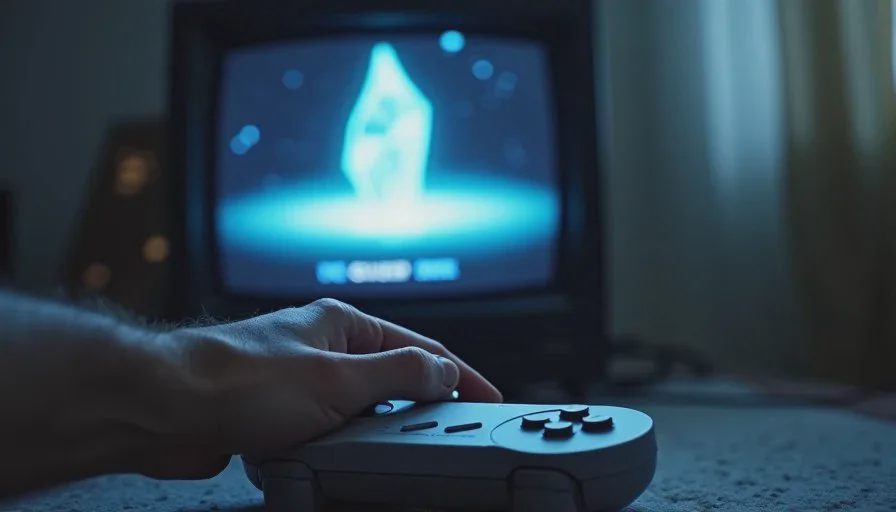
Now I play games to return. To return to the person I was when I first held a controller. To return to the feeling of being sixteen and having a whole world ahead of me. To return to the specific texture of a CRT screen, a loading chime, a boot logo, a save point. The games aren't escapes anymore. They're doorways back.
That's why I write this blog. That's why I go back to old games and ask whether they still hold up. Not because I need them to be good — though I'm honest when they're not — but because the act of returning is valuable even when the game isn't. The going back is the thing. The sitting down, the powering on, the waiting for the boot screen. It's all part of it.
What I'd Tell the Eighteen-Year-Old Me
If I could go back and tell my younger self anything, it wouldn't be "play less" or "don't waste your time." I needed those hours. They made me who I am.
What I'd tell him is this: pay attention to what you love, because it will teach you who you are. The games you can't stop playing, the worlds you don't want to leave, the feelings that stick with you after the credits roll — those aren't just entertainment. They're clues. They're the beginning of a map. And one day, when you're older and your time is finite, you'll use that map to find your way back.
Some games were great for who we were, not who we are now. And some games were great for who we were, and they're still waiting for us to come back and see them with older eyes. Both things can be true. I hold them together now, and I'm glad I can.
That's what getting older gave me. Not less love. A different love. A love with boundaries, with standards, with memory woven through it. It's not the love I expected. It's better.